
We found our favourite zoo in Beijing – The Beijing Daxing Wildlife Park is a must-visit in our family-friendly itinerary.
Having visited Bangkok’s Safari World, Chimelong Safari Park, Bali Zoo, and of course Singapore’s Mandai Wildlife Reserve, we thought we had a pretty good idea of what to expect. How different could another zoo really be?
That assumption was quickly challenged in Beijing.
The Beijing Daxing Wildlife Park is, for now, officially our favourite zoo. Spanning a massive 3,600 acres — about 20 times the size of the Singapore Zoo — and home to over 10,000 animals across more than 200 species, it offers a scale and level of interaction that is hard to match.
YEAR-END CAMPS: Give Your Child's Language Skills A Boost With Themed Camps



Beijing Daxing Wildlife Park: A Zoo Built Around Interaction
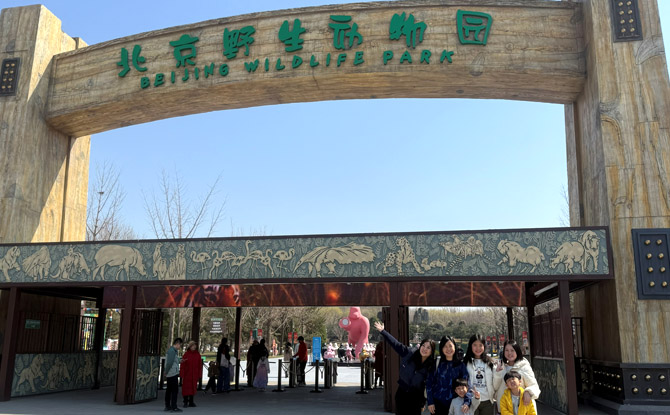
It is best to set aside a full day here to truly experience what the park has to offer.
What stood out almost immediately was the park’s strong emphasis on human-animal interaction. This is not a zoo where you passively observe animals from behind barriers or from a distance. Instead, the experience is designed to be immersive and engaging, often bringing you unexpectedly close to the animals themselves. At times, the boundary between visitor and wildlife feels intentionally blurred, making each encounter feel more personal and memorable.
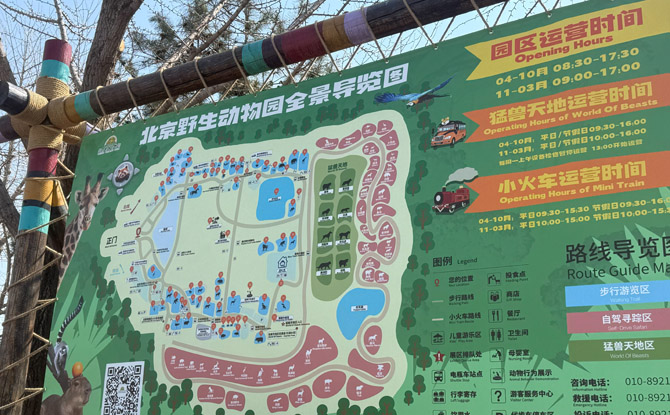
The park is thoughtfully organised into three main zones — the walking zone, the safari zone, and the World of Beast — each offering a distinct way to experience wildlife, from leisurely exploration to guided safari encounters and close-up interactions with predators. Admission to the park is priced at 150 RMB for adults and 90 RMB for children, making it relatively accessible given the scale and variety of experiences on offer.
Walking Zone: Where Play Meets Exploration
The walking zone alone is expansive, with a mix of open-air habitats and glass enclosures that bring visitors much closer to the animals than you would typically expect. Right at the entrance, visitors can purchase a bag of animal feed for around RMB60, which includes vegetables, carrots and even popcorn.
Unlike most zoos where feeding sessions are tightly controlled — requiring you to queue and pay separately for each interaction — the experience here feels far more flexible. Visitors are free to feed animals at various interaction points throughout the park, making it a much more spontaneous and engaging experience.
We also noticed local families bringing along their own vegetables and carrots for feeding, which could be a way to save on costs, although for us, it felt a little too much of a hassle to prepare in advance.
For larger animals such as ostriches, safety is clearly considered, with visitors feeding them from a distance using metal ladles. Similarly, for wolves and other carnivorous animals, feeding is carried out through specially designed compartments where the meat is dropped into a secure chute before being transferred to the animals.
These thoughtful measures ensure that while the interactions remain exciting, safety is never compromised.
As we made our way through the park, feeding opportunities appeared frequently. Some animals roamed freely within designated areas, while others could be fed within their enclosures. There were also opportunities to purchase meat to feed predators such as wolves and foxes, adding another layer of interaction to the experience.
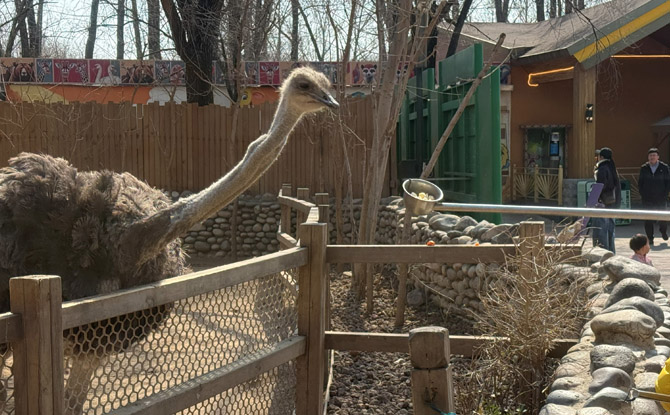
The Boays had a great time feeding the ostriches and were especially amused to discover that pigs enjoy popcorn.
The walking zone also serves as the main gateway to the park’s other key attractions. This is where visitors can board the mini train into the safari zone, as well as the protected bus that takes you into the World of Beast, making it a natural starting point for the rest of the adventure.
Do note that the mini train station is located nearer to the entrance, while the World of Beast boarding point is situated much deeper within the park, closer to the far end. As such, it is helpful to plan your route and schedule accordingly to make the most of your time.
What we appreciated most was how the park seamlessly integrates play into the zoo experience. It is not just about moving from one enclosure to another, but about exploration along the way.
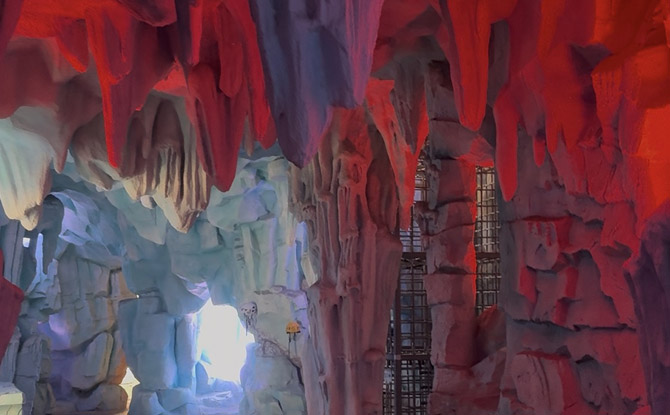
At one point, we entered a traditional Chinese-style building that led into a Himalayan ice cave, passing monkey enclosures and free-roaming peacocks along the journey. Slides and tunnels are thoughtfully built into the pathways, transforming what could have been a simple walk into an adventure.
This concept is carried throughout the park, with playgrounds modelled after ant nests, expansive play zones featuring mazes and high slides, as well as rope courses that encourage children to climb and explore. These spaces provide natural breaks in between animal viewing, allowing the children to stay engaged while experiencing the park in a more dynamic and interactive way.
Special Themed Zones
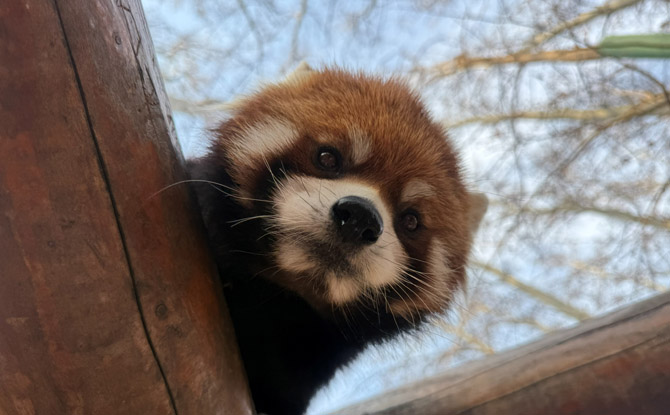
The special themed zones were also highlights. In the Red Panda Forest, we were able to get incredibly close to the animals — so close that one wandered right in front of us. It was one of the rare occasions where we felt fully immersed in the environment, and even had the chance to gently pat a red panda as it moved past us.
Within the same zone, suspension bridges and play structures added to the sense of adventure, making the children feel like explorers in a forest setting.
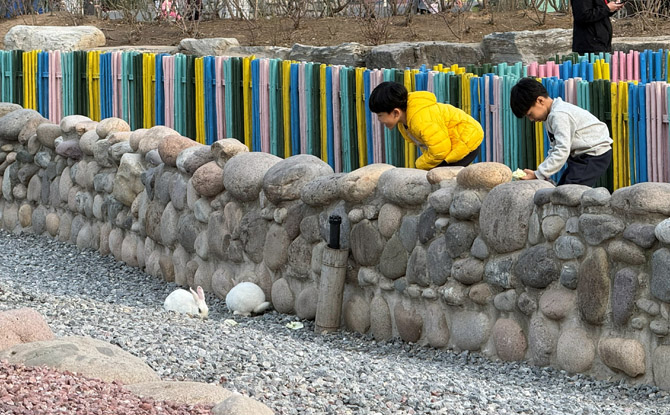
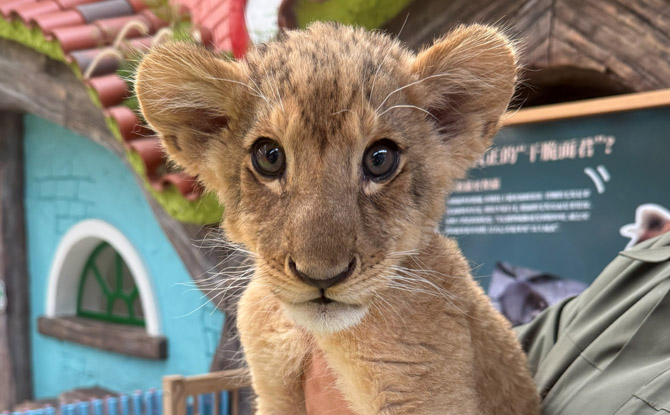
The children’s zone deserves special mention as well. Here, young visitors can interact with a range of farm animals such as pigs, goats, sheep and ducks. There is also a nursery where we had the opportunity to observe baby tigers and lions up close.
Every part of the park reinforces the idea of interaction, making it far more engaging than a traditional zoo visit.
As this was our final stop, we found ourselves a little short on time and did not manage to fully explore the area. There were clearly more playgrounds and additional opportunities for animal interactions that we had to skip, which left us feeling that this was one section worth spending more time on.
Safari Zone: A Structured Wildlife Journey
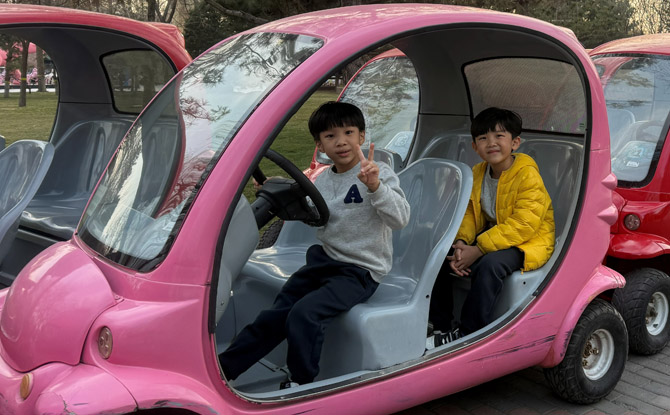
The safari zone offers a different perspective altogether. Visitors can either opt for a self-drive experience or take the complimentary mini train, which runs through large enclosures for about 90 minutes.
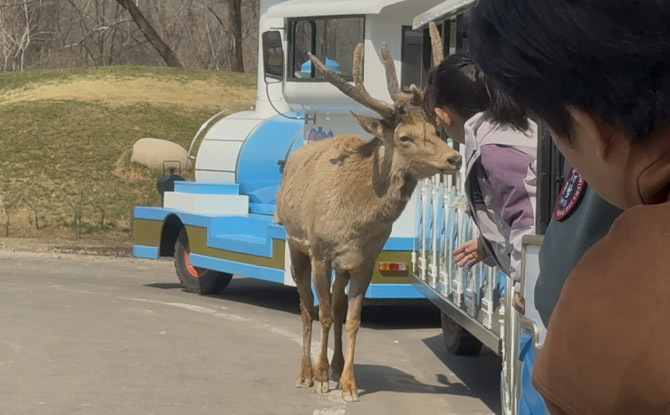
Unlike some safari parks where animals roam freely across vast open plains, this experience feels more structured, with animals housed in naturalistic environments separated by moats. There are still opportunities to feed herbivorous animals such as deer and donkeys, adding an interactive element to the journey.
We also noticed that the self-drive option was available at around RMB200, with visitors getting to choose from a range of rather fanciful vehicles, including sports cars and cabriolets. From what we had seen on Xiaohongshu, it gave the impression that you could freely drive around and feed animals throughout the park.
In reality, however, the experience is more limited, with access largely similar to what visitors on the mini train can enjoy, including feeding the same animals at designated points. While it does add a fun and unique element, we found it more of a novelty than a necessity.
On hindsight, we were quite glad we chose the train, as it provided a more relaxed experience without the need to navigate the route ourselves.
World of Beast: Up Close with Predators
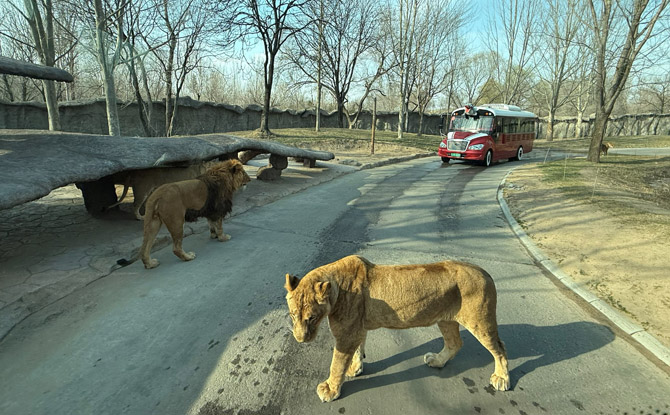
The World of Beast takes the safari concept a step further. Visitors board a specially protected bus that brings them into enclosures housing carnivorous animals such as wolves, lions, tigers and bears.
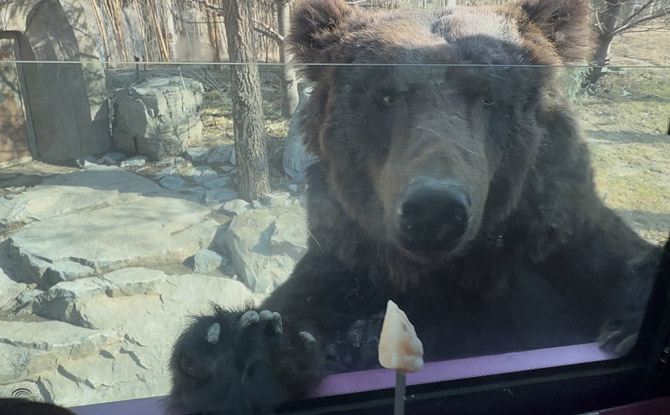
The ride lasts between 40 to 60 minutes and is included in the entrance ticket. For a more immersive experience, visitors can purchase cups of meat at around RMB50 to feed the animals. Among all the encounters, the bears were the most memorable, walking alongside the bus and placing their paws on the windows while waiting expectantly for food.
Compared to the mini train, the bus ride felt more rugged, with some sections being noticeably bumpier, so visitors who may be sensitive to such conditions might want to take note.
For the Boays, this was also one of the most memorable parts of the visit, as they had the autonomy to feed the animals themselves. It was amusing to watch their different approaches — Adriel carefully rationing his meat and feeding selectively, while Ashriel enthusiastically tossed his pieces out without much thought. If your kids are anything like ours, you might want to get an extra portion or two.
Food and Getting Around the Park
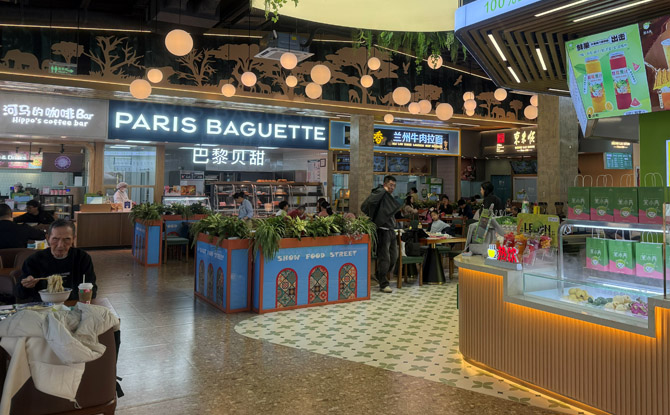
Even the food options in the park exceeded expectations. Instead of the usual pre-prepared meals commonly found in theme parks and zoos, we found ourselves exploring multiple food courts scattered across the park.
One of them even featured familiar brands such as Paris Baguette and YGF Malatang, alongside creative offerings like drinks topped with capybara-shaped icing.
Given the size of the park, getting around efficiently is important. Visitors can rent a self-driving buggy — around RMB400 for a two-seater and RMB600 for a four-seater — which allows you to explore at your own pace and stop whenever something catches your attention.
Alternatively, there are more affordable options such as mini trams that transport visitors between different sections of the park. Looking back, the self-driving buggy is one experience we wished we had tried, but unfortunately did not have enough time for.
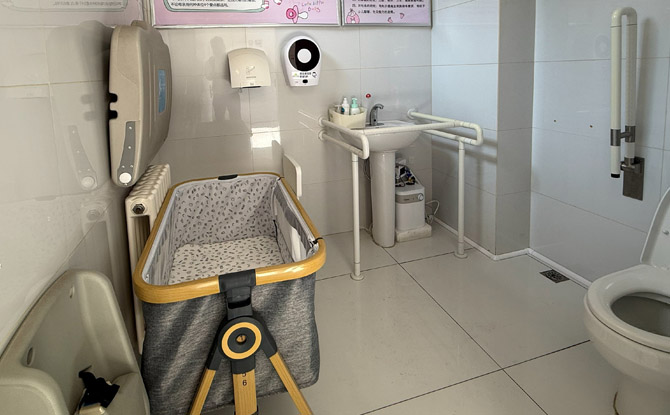
Nursing mothers will also be glad to know that there are nursing rooms and diaper-changing facilities available within the park, reflecting the level of thoughtfulness that has gone into its design.
Planning Your Visit: Operating Hours & Tips
Planning ahead is essential to fully enjoy what the park has to offer. The park is located about an hour from Wangfujing, although traffic conditions can extend the journey to around one and a half hours each way.
For larger groups of more than five, hiring a driver may offer better value. While private hire rides may cost a similar amount, having a dedicated driver typically provides more comfort and space — which can make a difference, especially for a journey of this length.
Given its proximity to Daxing International Airport and Universal Studios Beijing, another approach is to plan your itinerary such that you start or end your trip in this area, combining these attractions to better optimise your time.
The park generally operates from 8:30am to 5:30pm between April and October, and from 9:00am to 5:00pm between November and March, with last entry typically around 4:00pm. Certain attractions also follow fixed schedules.
The safari train usually runs from mid-morning to mid-afternoon, while the World of Beast experience typically closes around 4:00pm. This makes it important to plan your route in advance and prioritise key experiences earlier in the day.
One of our biggest regrets was arriving close to 11am after a tiring day at Universal Studios Beijing. By the time we completed the safari train ride and stopped for lunch, there was limited time left to explore the rest of the park. This meant rushing through enclosures, skipping playgrounds and missing some performances. Starting early would have made a significant difference to the overall experience.
Final Thoughts
All in all, our visit to Beijing Daxing Wildlife Park was a pleasant surprise. Despite thinking that we had experienced enough zoos to know what to expect, we were genuinely impressed by the scale, creativity and level of interaction offered here.
It is a place that challenges preconceived notions of what a zoo should be, and one that left both us and the children with lasting memories.
For more on our family-friendly Beijing itinerary, we have shared nine days of fun here.