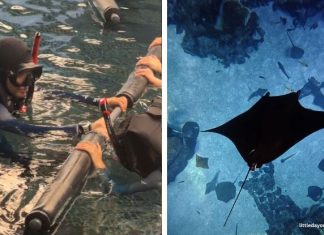

Take a deep dive into the world beyond the light of the surface at Into the Ocean: Journey Beneath at ArtScience Museum.
Presented in collaboration with OceanX, one of the world’s leading ocean exploration organisations, the multi-sensory exhibition located at the Basement Level of ArtScience Museum blends art, science and cutting-edge technology to transport visitors into the ocean’s furthest reaches.
Into the Ocean Exhibition at ArtScience Museum
YEAR-END CAMPS: Give Your Child's Language Skills A Boost With Themed Camps



The Into the Ocean exhibition at ArtScience Museum takes visitors on a journey into the deepest depths of the earth through six different zones.
The journey through the exhibition starts at the surface with OceanX’s state-of-the-art research vessel. It then goes on to the Descent Zone before passing through the Photic Zone, Twilight Zone, Aphotic Zone, before finally returning to the surface.
As visitors pass through each zone, they will discover a new layer of the ocean.
Zones 1 & 2: Descent
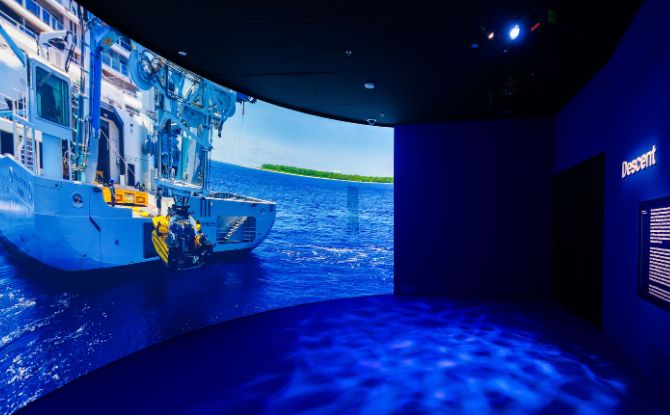
Entering through a narrow passageway, visitors are greeted by a room where the submersible is preparing for an ocean exploration mission. The video introduction then takes you downwards, descending into darkness on a voyage of discover into one of the most unexplored parts of the Earth.
Zone 3: Photic Zone
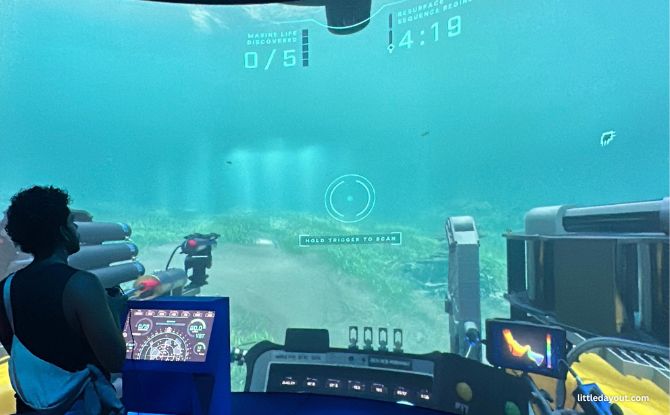
The Photic Zone spans from the Earth’s surface to about 200 metres below.
The sun is still able to penetrate this zone and it is powered by photosynthesis which produces vast amounts of oxygen. This forms the building blocks of marine food chains.
In this zone, you can learn about the biodiversity found here, from microscopic plankton to corals and marine megafauna.
Learn about the intricate systems that sustain reef life, shaped by mutually beneficial relationships between corals and photosynthetic algae known as zooxanthellae.
This zone of the Into the Ocean: Journey Beneath exhibition also explores how reefs function as dynamic, interconnected environments, from the movement of nutrients through reef food webs to the provision of shelter and the regulation of marine populations. There are displays of core samples of coral.
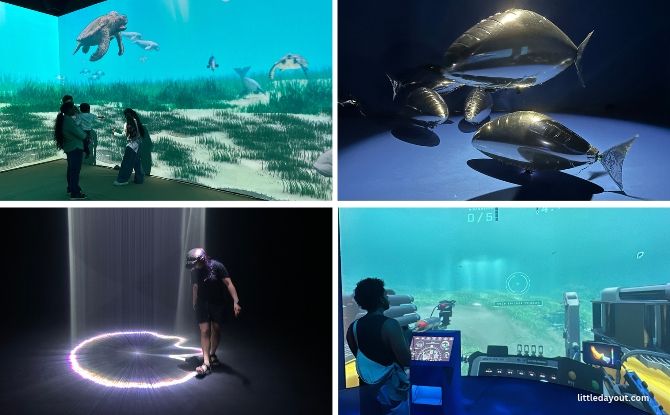
You can even get behind the controls of a submersible and imagine that you are on the hunt through the water for new marine life on a big screen.
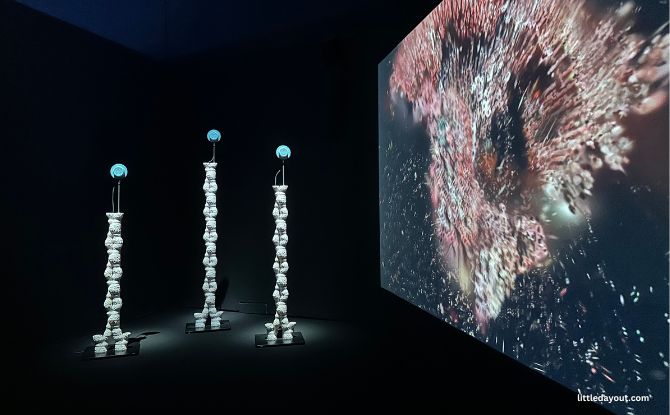
There is also an interesting exhibit tucked away in the order of the zone. This showcases how solar power is powering sound is being used to attract life to coral.
One of the highlights is an art installation by Flock of by bit.studio, a Thailand-based creative technology studio. This installation features kinetic helium-filled balloons move continuously and are designed to resemble a school of fish.
Each “fish” drifts independently yet remains attuned to the movements of the others, creating ever-shifting composition that changes in real time.
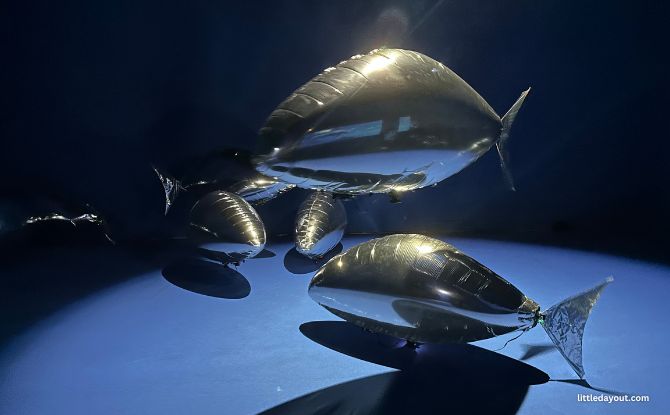
You can step inside the installation with the “fish” moving through the space. It is an immersive way that engages you to reflect on the balance between individual and group behaviour.
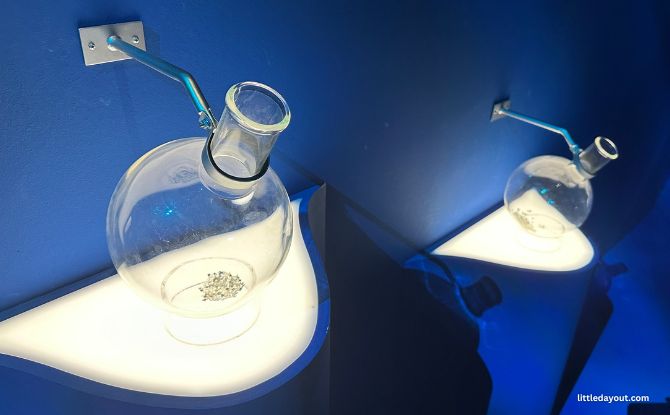
Running throughout the exhibition is Invisible Ocean by Sissel Tolaas, an olfactory work that translates oceanic environments into evocative “smellscapes.”
Drawing on ocean samples from the coasts of Costa Rica and molecular chemistry research, the work allows visitors to experience the ocean’s biodiversity and fragility through scent alone.
Zone 4: Twilight Zone
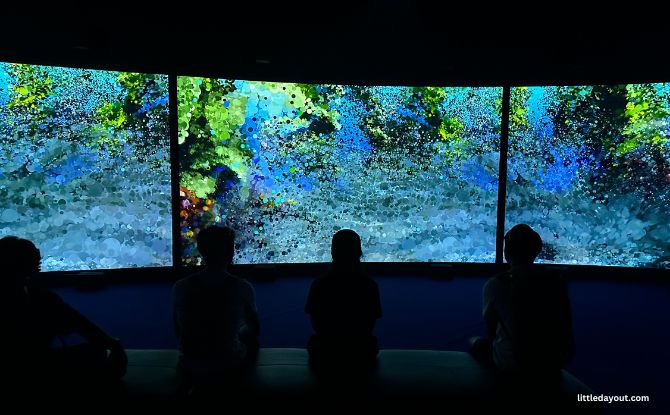
In Twilight Zone, visitors are introduced to the section of the deep ocean which extends from approximately 200 to 1,000 metres below the surface. Here, the environment is characterised by low light, cold temperatures and high pressure.
Yet, it is home to a large and active concentration of marine life.
Discover the phenomenon of vertical diel migration, where vast numbers of organisms travel toward surface waters at night to feed and return to the depths during the day.
As visitors descend, changes in temperature and salinity reveal how the ocean is a system organised into distinct layers shaped by differences in density and movement.
Stepping closer to the data wall, visitors’ movements allow them to embody an ocean current and see how their actions influence the flow of life.
One impressive installation to look out for is Seeing Echoes in the Mind of the Whale. This large-scale installation by London-based artist collective Marshmallow Laser Feast invites visitors to experience the ocean through the unique sensory world of whales.
Using hydrophone recordings, underwater videography, scientific research and real-time computing, the work transforms the gallery into a vivid, spatial environment where echoes, vibrations and shifting frequencies reveal how whales perceive their surroundings.
Zone 5: Aphotic Zone
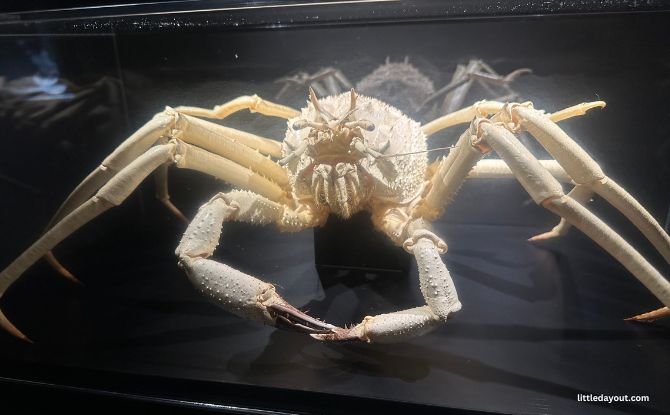
Next step through a room that showcases extraordinary adaptations such as bioluminescence before venturing approximately 1,000 metres below the ocean’s surface to the seafloor or the Aphotic Zone, which makes up the largest portion of the ocean.
Visitors are introduced to environments of permanent darkness, cold temperatures and extreme pressure, including the deepest parts of the ocean such as the Mariana Trench.
Visitors learn how life in the Aphotic Zone survives without sunlight, relying on sinking organic matter or chemical energy rather than photosynthesis.
This has resulted in heightened senses that detect vibrations and chemical signals.
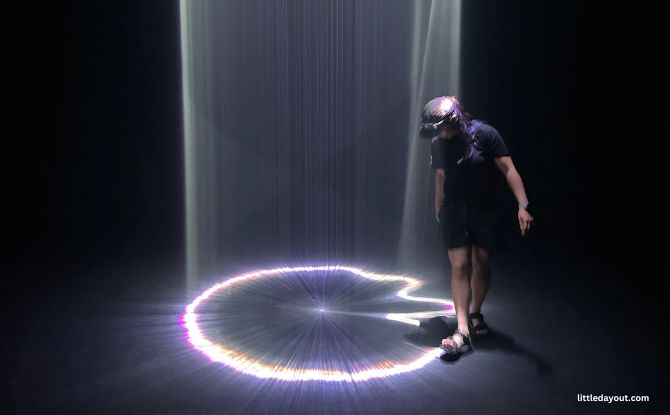
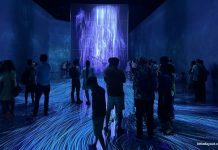
An impressive highlight here is Lucida, an immersive light sculpture that reveals the unseen architectures of sound, energy, and perception. Transforming light into a tactile, embodied experience, the work invites viewers to encounter waveforms as living systems rather than abstract data.
As you pass through the beams, the work responds to your movement, activating shifting planes of light that curve, ripple, and momentarily crystallise before dissolving again
Another work presented is Towards Abyssal Plains, is a sound work by Norwegian artist Jana Winderen that traces a vertical descent into deep-ocean environments. It focuses on how sound changes across layers shaped by pressure, temperature, salinity and depth, emphasising the practice of deep listening.
It provides a revealing look at how life thrives in the ocean’s darkest depths, below 1,000 metres, where sunlight cannot reach and temperatures hover around 4°C.
Species featured in the footage include squat lobster, headless chicken monster, vampire squid, atolla jelly and more.
Zone 6: Resurface
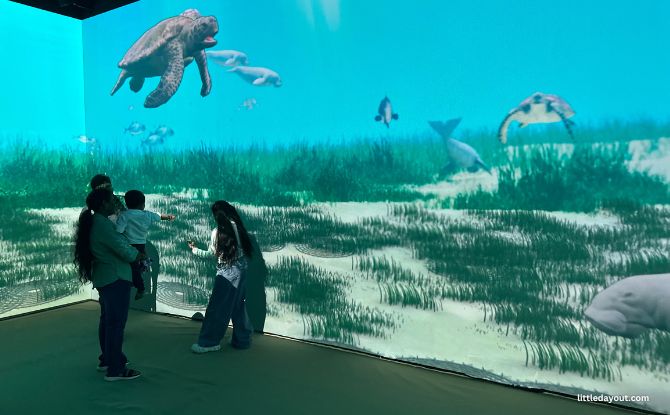
The concluding gallery of the ArtScience Museum and OceanX exhibition shifts the focus shifts to shallow coastal waters, where vibrant seagrass meadows play a vital role as nurseries for countless marine species and act as powerful allies in combating climate change.
Developed with World Wide Fund for Nature (WWF), Singapore, Seagrass Stories: Help the Ocean to Heal invites visitors to take part in real restoration techniques linked to conservation projects across the region.
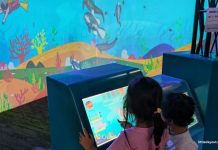
There is also a digital interactive wall where you can engage in activities such as digitally replanting of sea grass.
Into the Ocean: Journey Beneath Exhibition
Into the Ocean: Journey Beneath is now on at ArtScience Museum till 1 November 2026.
Get more details about Into the Ocean at ArtScience Museum.