
From 19 June 2026 to 24 January 2027, Crosscurrents: Masterpieces of Mughal, Safavid, and Ottoman Art from the Musée du Louvre exhibition features 100 masterpieces from the Louvre’s Islamic art collection alongside 30 works from the Asian Civilisations Museum, showcasing how trade, diplomacy, migration, and artistic exchange shaped a cosmopolitan world.
Crosscurrents: ACM Exhibition That Charts The Artistic Circulations Across Asia
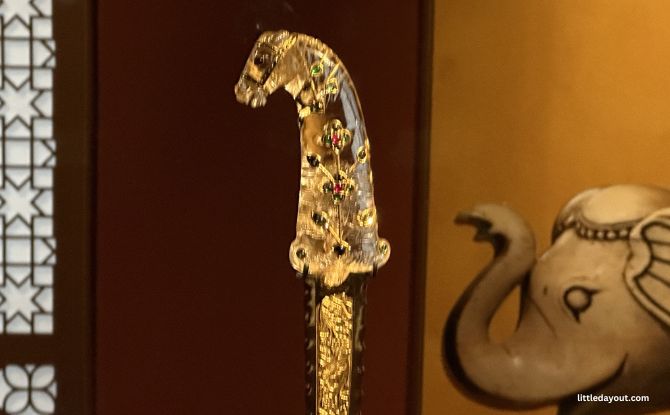
The sixteenth and eighteenth centuries saw the emergence of three great empires – the Mughal, Safavid, and Ottoman empires. They also served as major artistic and cultural centres, shaped by trade, movement and exchange.
Within the empires, artists blended influences from China to Europe to creating distinctive visual languages that produced some of the finest works of Islamic art.
YEAR-END CAMPS: Give Your Child's Language Skills A Boost With Themed Camps



The Crosscurrents: Masterpieces of Mughal, Safavid, and Ottoman Art from the Musée du Louvre exhibition at the Asian Civilisations Museum explores how courtly life and artistic production in Mughal India and Safavid Iran developed alongside expanding trade routes.
It presents 100 masterpieces from the Louvre, presented alongside Southeast Asian objects drawn from the Asian Civilisations Museum’s collection.
Exploring the Masterpieces of Islamic Art
The exhibition starts at the Islamic Gallery on Level 2 of the Asian Civilisations Museum.
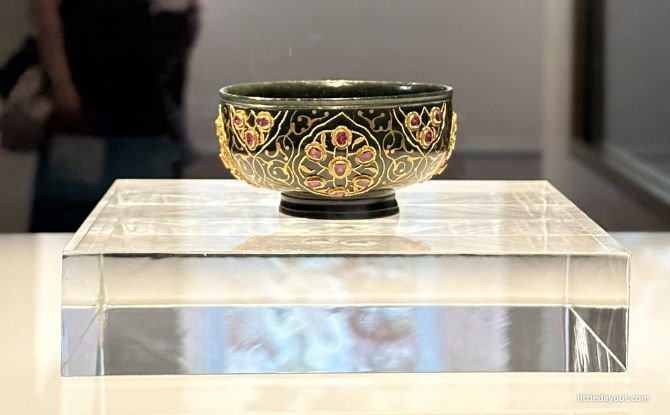
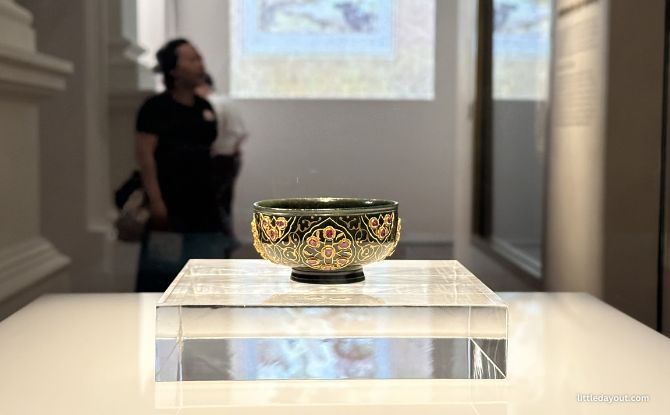
Amongst the highlights is a cup, fitted with dark green jade and delicate gold wires, collected by King Louis XIV (1638–1715). It was exhibited at Versailles before arriving at the Louvre in 1796. Recent analysis shows that the rubies came from Myanmar, evidence of the vast trade networks that carried gemstones across Asia to Ottoman workshops.
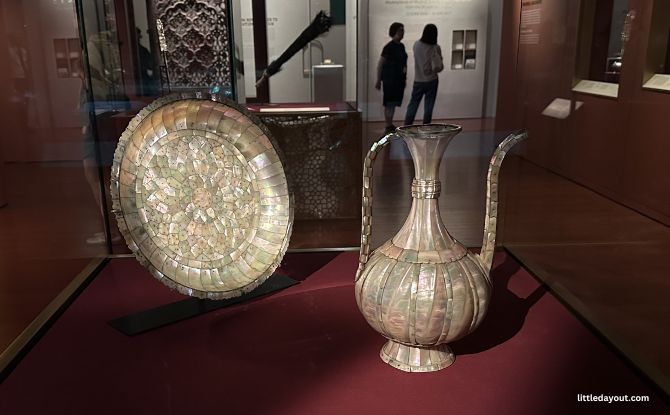
Another highlight are a mother-of-pearl ewer and basin in Mughal India. It is made almost entirely of mother-of-pearl. Such objects were shipped through Goa to Europe, the Middle East, the Ottoman Empire, and the Dutch East Indies.
The ewer’s distinctive Indian form, with curved spout and fluted body, suggests it may have been made for local elites or for export to the Ottoman world.
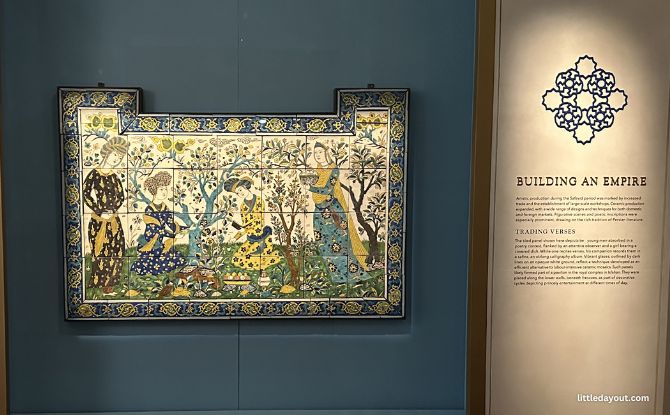
Another display shows a tiled panel from Safavid Iran that offers a glimpse into the literary culture and intellectual life that flourished in Isfahan. It depicts two young men engaged in a poetry contest, while another records the verses in a safina, an oblong calligraphy album.
Persian literary culture also left a lasting impact on Southeast Asia, shaping the development of the hikayat tradition and contributing Persian loanwords and ideas into Malay and Siamese court culture.
Adaptations of Artistic Forms
The exhibition continues on Level 3 at the Design Gallery where works from the Ottoman world and Southeast Asia reveal how artistic forms were adapted to cultural settings.
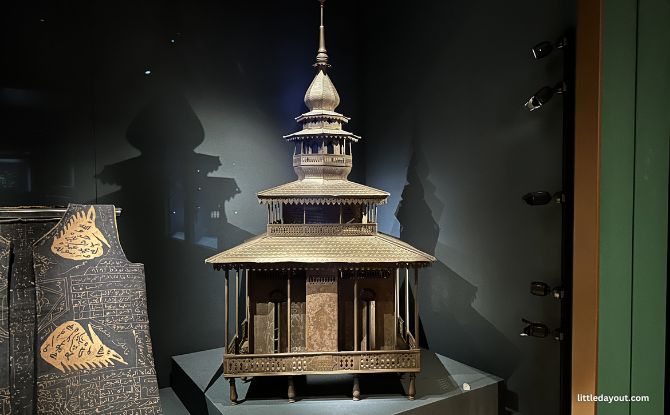
A brass and copper mosque model from West Sumatra is an example of how Ottoman and Mughal architectural forms were adapted in Southeast Asia.
The multi-tiered roof reflects regional architecture, the crowning dome – adopted in West Sumatra in the late 19th or early 20th century and influenced by Mughal or Ottoman architecture – signals a cosmopolitan Islamic identity.
Iznik ceramics likewise illustrate artistic exchange on a global scale with Ottoman potters responding to imported Chinese porcelain, developing decorative style of their own.
Decorate Your Own Tile
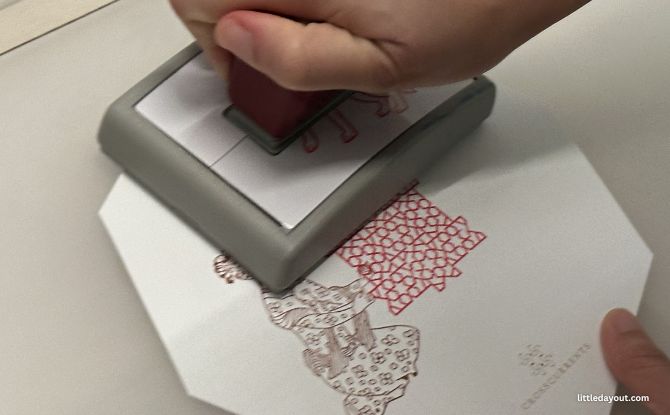
On both Level 2 and Level 3, you will find stamping stations where you can create a “tile” using a paper template provided.
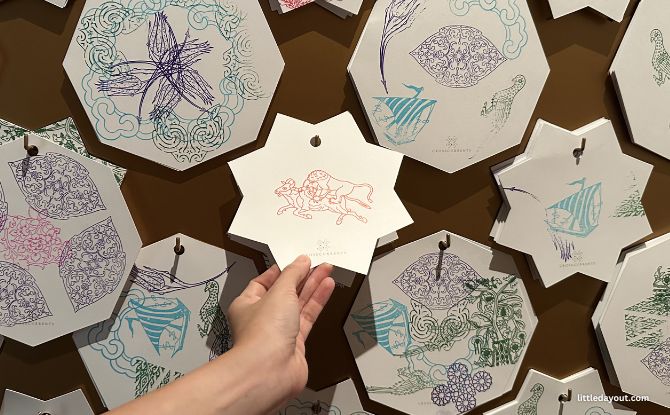
Decorate the tile and hang it up on the a display wall on Level 3.
Crosscurrents: Masterpieces of Mughal, Safavid, and Ottoman Art from the Musée du Louvre
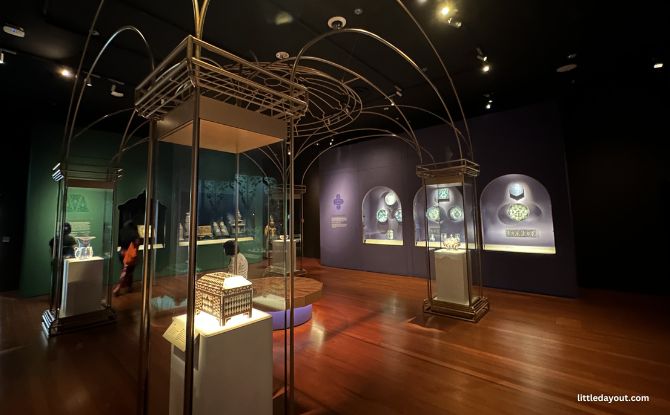
When: 19 June 2026 to 24 January 2027
Where: Asian Civilisations Museum
General museum admission applies. Free for Singaporeans and Permanent Residents
Website: Crosscurrents: Masterpieces of Mughal, Safavid, and Ottoman Art from the Musée du Louvre