
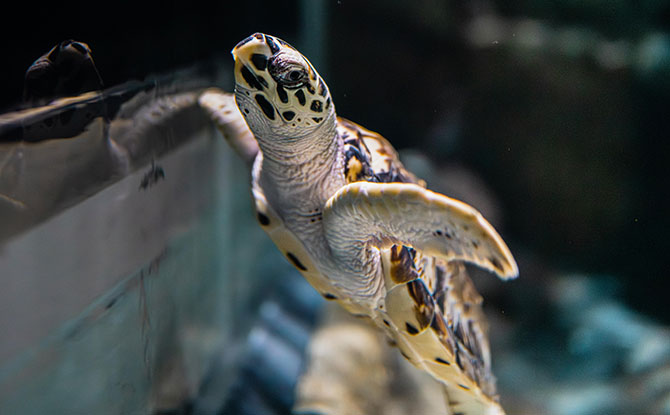
In October 2025, Singapore Oceanarium at Resorts World Sentosa, in partnership with the National Parks Board (NParks), received eight Hawksbill turtle hatchlings as part of a headstarting programme. Now, in May 2026, these hatchlings have been been moved to a front-of-house habitat at the Horizontal Migration Zone where they will continue to receive care until they are assessed to have a strong chance of survival in the wild and released.
Hawksbill Turtle Hatchlings Under Care at Singapore Oceanarium
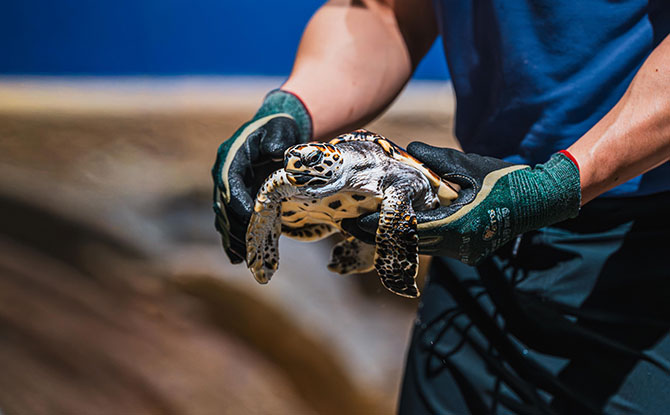
The hatchlings, identified as H12 to H19, were hatched at NParks’ turtle hatchery at Small Sister’s Island in October 2025, and have been under specialist care at Singapore Oceanarium where they underwent quarantine, veterinary assessment and early-life husbandry.
Turtle headstarting is a conservation strategy where turtle hatchlings are raised till they are larger in size, before they are released into the wild, to bypass the most vulnerable stage of their life.
YEAR-END CAMPS: Give Your Child's Language Skills A Boost With Themed Camps



This is designed to improve their chances of survival during their critical first phase of life.
The headstarting programme brings together the complementary strength of Singapore Oceanarium’s marine animal care expertise, public education and research capabilities, and NParks’ conservation expertise in safeguarding Singapore’s native biodiversity.
The Critically Endangered Hawksbill Turtle
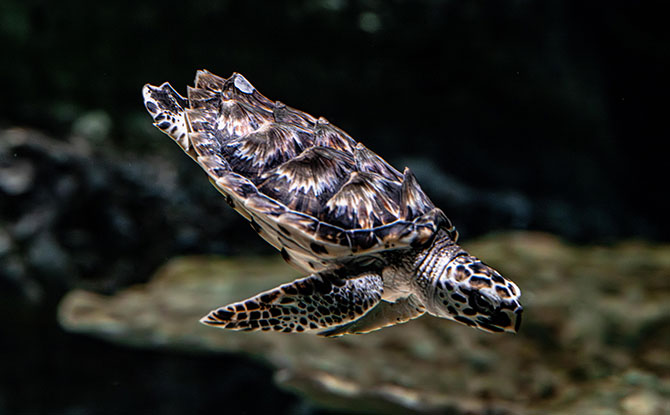
The Hawksbill turtle is listed as Critically Endangered on the International Union for Conservation of Nature (IUCN) Red List.
Their earliest phase of life is the most perilous for these turtles, with survival estimates for hatchlings reaching adulthood often cited in the range of 1 in 1,000 to 1 in 10,000 due to predation and other natural and human-caused threats.
In 2019, the then S.E.A. Aquarium launched the first phase of the headstarting effort with NParks, with the support from the Marine Turtle Working Group and Friends of Marine Park.
During this period, 10 hatchlings were received and reared under expert care before being progressively released in 2023 and 2024.
The current cohort of eight hatchlings builds on this foundation and represents the next phase of the collaborative effort.
View the Hawksbill Turtles at the Singapore Oceanarium From 11 May Till They Are Ready to Released Back to the Wild
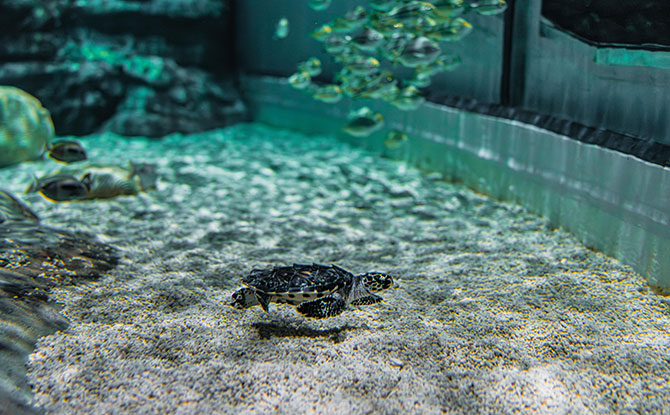
From 11 May 2026, the eight Hawksbill turtles will become part of Singapore Oceanarium’s efforts to connect visitors with the science and significance of marine conservation.
Through the turtles’ journey, visitors will be able to learn more about Singapore’s marine biodiversity, the threats facing sea turtles, and the long-term work required to support wildlife recovery.
The hatchlings have been cared for with a strong emphasis on maintaining natural conditions to ensure they are able to integrate back into the wild after release.
Measures includes the use of natural feeding practices and the installation of heavily tinted privacy films in the entire habitat tank to prevent the hatchlings from becoming too familiar with human beings.
Based on past growth trends the turtles may be considered for release after approximately 15-20 months, subject to their condition, development and health status.
While no conservation programme can guarantee survival after release, the headstarting effort is designed to give them a better chance at survival in the wild. To support post-release monitoring, selected individuals may be later fitted with satellite and flipper tags, in accordance with established animal welfare guidelines on transmitter weight.
Nick Derbyshire, Senior Director of Animal Care at Singapore Oceanarium, said: “Giving these hatchlings a stronger start can make a real difference to their survival in the wild. Through this partnership with NParks, we are combining field conservation, specialist care and public outreach to improve outcomes for a critically endangered species, while deepening public understanding of Singapore’s marine biodiversity.”