

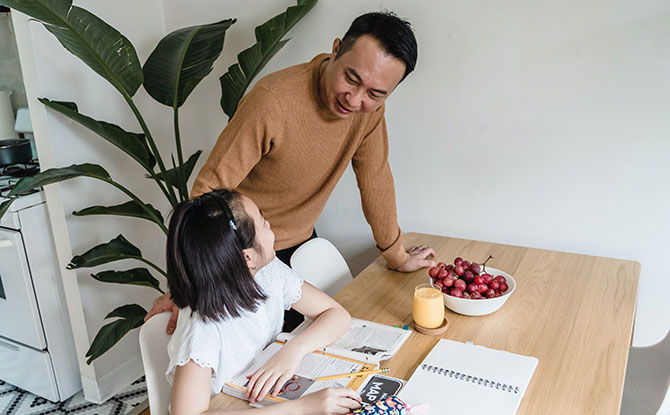
Part of parenting is also sitting with our child and helping them with their homework, schoolwork, academics. This ensures they have our support through the difficult problems they face while staying on top of their studies.
It is exam season again, and we find out from Cindy Lim, @ourmindfulpod, a Certified Parent Educator trained in Satir Therapy and Social Work on how to best support our children in their school work.

Tips from @ourmindfulpod on Coaching Children in their School Work
How can we help our kids in academics and school work?
Firstly, let us acknowledge that it is not easy to support our children with schoolwork on top of our daily commitments. So, kudos to every parent who puts in the effort!
DISNEY ADVENTURE CRUISE: Guide and Tips to Disney's Latest Ship
MARCH HOLIDAY FUN: 20+ Things to with Kids in Singapore



The most practical way to help is to first familiarise ourselves with what our child is learning in school. It may sound daunting, but being aware of the syllabus helps us track their progress and spot areas where they are weaker.
Personally, my children follow an after-school schedule where they complete their homework in the afternoon. When I return from work, I review their work, identify errors, and go through them together. This helps solidify their understanding and shows them that learning is a process, not just about getting the “right answers.
Is there a line to draw when it comes to academic support? How much help is too much?
Help comes in many forms. The key question we should ask ourselves is: What kind of learner do I want my child to be? Do we want to raise active, independent learners, or passive receivers of knowledge?
I believe in guiding my children by revising with them—though I admit I ramp up more during assessment periods than on regular days. What matters is consistency: supporting them daily through homework checks, keeping to a structured routine, and ensuring they do not fall behind.
Too much help happens when parents end up doing the work for their child or constantly spoon-feeding answers. When this happens, the child loses the opportunity to learn resilience and problem-solving. Our role is to guide, not to take over.
My child is struggling in school, what should I do? Tuition is an attractive solution, but is it enough?

First, don’t panic—it’s not the end of the world if your child falls behind. Struggles are simply signals that they need extra support in certain areas. This is where one-on-one coaching at home can be very effective, even if it means just sitting beside them, guiding them through a few questions, and helping them rebuild confidence.
I also believe in keeping close communication with my children’s teachers, because they see our kids in the classroom every day and can give valuable feedback. At the same time, I am mindful of boundaries and do not expect instant replies—teachers are balancing many students and responsibilities too. Respecting that relationship keeps the partnership healthy.
Another tip is to connect with your child’s friends’ parents. Having an informal parent network helps me stay updated on school happenings and share practical tips on how best to support our kids. If you are not a group chat person (like me!), even keeping in touch with one or two parents makes a big difference.
If resources allow, tuition can provide targeted help in subjects we may not have the time or skills to coach. But tuition should supplement, not replace, parental involvement. Tuition is also not entirely necessary and we need not feel like we are lagging behind just because our children are not receiving it.
For families with limited resources, there are also community-based mentorship programmes—for example, those run by Residents’ Committees where they engage local university students to help primary school children with their schoolwork.
How do we help children who find it difficult to pay attention?
There are many reasons children struggle to pay attention. Some first questions to consider are:
Is my child getting enough rest at night?
Are we packing too many activities into the day?
Is the school environment supportive?
Are they simply adjusting to a new routine?
When my daughter first entered Primary 1, her teacher shared that she often doodled or read books instead of focusing on lessons. Instead of reacting negatively, I chose to understand why.
I realised she was used to the more flexible, play-based learning style in preschool and didn’t yet understand what “paying attention” looked like in primary school. With time, patience, and gentle guidance, she learnt the new expectations. I learnt that paying attention is a skill, and children sometimes need help learning what it looks like in different settings.
For parents who want to help train up their children’s attentiveness, a simple mindfulness practice can also be very effective. Here’s a 3-step method I’ve found useful:
Invite your child to sit in a relaxed position and close their eyes so their attention is focused on breathing.
Ring the sound of a bell (or any clear single sound, like a keyboard click or phone bell chime).
Upon hearing the sound, breathe in and out slowly together, three times, counting as you go: In, out… one. In, out… two. In, out… three.
The point is not to rush, but to slow down and pay attention to one thing at a time. Like training a muscle, it may feel awkward at first, but with consistent practice you’ll notice your child’s ability to focus improving over time.
What’s an appropriate amount of homework time per day for a primary school kid?
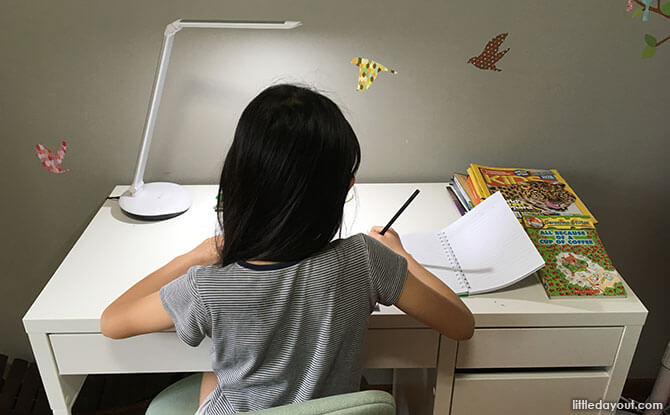
The amount of homework really depends on the school and also varies by grade. Some schools give daily assignments while others focus more on revision sheets or project work. Personally, I find homework helpful because it reinforces what my children learn in class and also gives me a window into what they might be struggling with.
In our home, I set a schedule where my children aim to complete their homework before dinner. This way, when I return from work, I can go through it with them, check their understanding, and address any gaps.
To help them stay focused, I also use the Pomodoro Method: 25 minutes of work followed by a 5 or 10-minute break. It keeps them fresh, motivated, and prevents homework from feeling like an endless slog. Ultimately, it’s not just about the number of hours spent, but about helping children build good concentration and consistent study habits.
What are some good study habits to instil?

When it comes to study habits, I believe the system we create is more important than the goals we set. Goals are useful because they show children where the endpoint is, but without a proper system—like routines, structures, and the right environment—those goals are hard to achieve. A child may want to do well academically, but they will struggle if there is no daily system in place to support that journey.
For my own children, I’ve seen this clearly. At one point, I noticed that after school, they naturally leaned towards play and relaxation and often found it hard to transition into homework.
To help, we created a written daily routine that they could follow step by step. This gave them clarity and reduced resistance, because they no longer had to “decide” what to do next—it was already mapped out.
Another thing that helped was giving them their own personal study space. Just having that designated environment served as a gentle reminder that it was time to focus. Observation is always key – our children’s behaviour gives us many clues on how to adjust the way we parent them.
Some other practical habits include:
Structured study time each day after school.
Regular breaks, such as using the Pomodoro method (25 minutes of work, 5 minutes of rest).
Decompression time before starting homework, so they can relax after a long day in school.
Consistent routines, like filling in their school handbook daily.
For parents who want to go deeper, I highly recommend James Clear’s Atomic Habits. It explains how to nurture small, consistent habits that set children up for long-term success. There’s also a component on applying these principles in parenting, which I’ve personally found very helpful.
Exams are coming, what are some good tips to prepare for exams well?
In addition to the good habits above, I’d highlight two things:
Familiarity with the exam format: This helps children feel confident and spend less time figuring out paper structures during the exam. Practice papers often hint at focus areas teachers emphasise, so pay attention to those.
Perspective: Exams test a child’s understanding of topics, not their worth as a person. Poor results simply show where more help is needed. While discipline and mastery are important, our children need to know they are loved unconditionally. Their results do not define them.
Coaching Our Children with Love
What important reminders especially in this season, thanks to Cindy! We want to remember to love our children as they are, and every bit of coaching comes from a place of love.
For more on Cindy’s sharing, head to @ourmindfulpod ‘s Instagram.
Read More Parenting Tips by Cindy Lim

If you would like a study plan for the exam season for your child, you can download it for free here. Read more on other exam revision tips.