


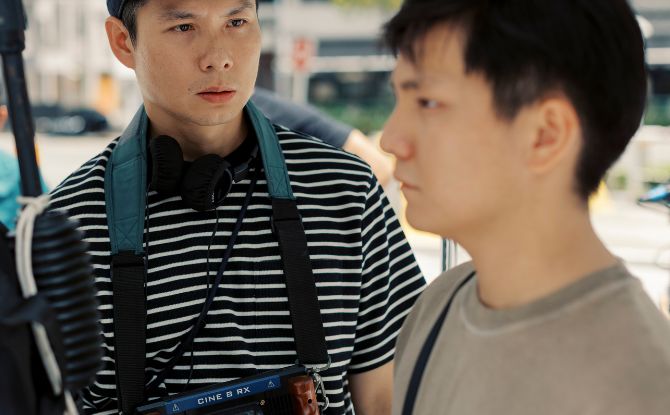
Anthony Chen’s much awaited film “We Are All Strangers” will open in cinemas starting 20 August. This is the first Singaporean film to compete for Berlinale’s Golden Bear, one of the most prestigious film awards. It also serves as a fitting end to the director’s Singapore Growing Up trilogy which comprises Ilo Ilo and Wet Season.
As someone who enjoyed Ilo Ilo, I was anticipating the new film with much excitement and leapt at the opportunity to see it at a media preview. Starring Golden Horse Award winner Yeo Yann Yann as well as Ilo Ilo child actor Koh Jia Ler, it brought back the same epic forces audiences would be familiar with – this time with Jia Ler all grown up (or not).
We Are All Strangers Plot
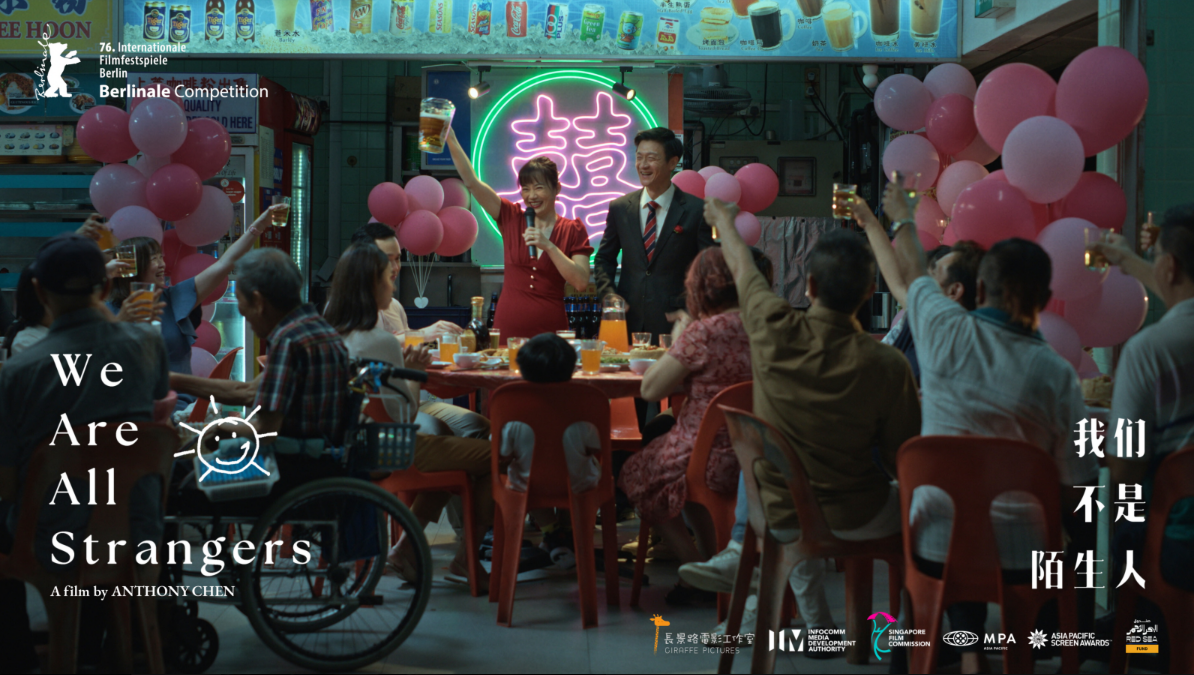
The plot surrounds a family living in the heartlands and overcoming various adversities of life. The main protagonist is JunYang, a young man in his early twenties, emerging from NS living a carefree life nonchalantly and learning lessons along the way through starting a family unit and navigating losses. He is reluctant to accept his stepmom played by Yeo Yann Yann into the family, despises and looks down on her Malaysian background and job as a beer lady.
YEAR-END CAMPS: Give Your Child's Language Skills A Boost With Themed Camps



While struggling to make ends meet and pressured by loansharks at the door, the Lees have to make hasty decisions that adds fuel to fire.
Familial Ties, Parenting, Singapore Culture & The Definition of Love
In Anthony Chen’s style, the film treats audiences to many many fine details that we usually overlook, and perhaps underappreciate. We Are All Strangers opens with a scene of JunYang’s father, Boon Kiat, meticulously preparing a well-loved local cuisine – Hokkien Mee and the familiar scenes at the coffee shop are repeated again later in the movie for good reason.
While some might find the pace a tad too slow, I enjoyed the panning of Singapore’s sights whether in the heartland or in the city, inside the coffee shop, on the bus or in a taxi. These are details we sometimes miss yet all beautiful strokes of our citystate. Boon Kiat points this out clearly that those on the bus get to see different sights instead of rushing around in cars. His contentment and simple philosophy of life is a sharp contrast to Junyang’s aspirations despite being a school dropout and not bearing much responsibility until much later.
The theme of love and familial ties is also portrayed through the Lee family’s ordeals. Love is one force that can’t be denied – whether as parent, lover or kin. Boon Kiat and Tracy (Lydia’s mother) clearly loved their children in different ways. One paid for his son’s mistakes while the other left her daughter to bear the consequences. Outcomes were both hard to watch and it left me to think of my own role as a mother to my adolescent sons should they make similar choices.
Audiences can see more contrasts between the love between a youthful couple and that of the middle-aged couple. One raged with passion and folly while the other was hardly physical, mostly quiet and unassuming. In the end, all of them had to come to terms with their responsibilities and the ultimate sacrifice of a parent’s love for the well-being of a young family. The scene was when many tears flowed and also coming full circle of Junyang’s growth culminating in the continuation of his father’s legacy.
Who Should Watch this Film? Everyone!

Intentionally crafted for the general audience, this film is for everyone in Singapore. There are a few profanities in the film hence it is recommended for older adolescents and up.
Apart from the rich local flavours, the film also juxtaposes the tensions within our city – the prosperous glorious surface and the raw struggles of the man in the street. I believe the film will resonate with everyone regardless of housing, income and values.
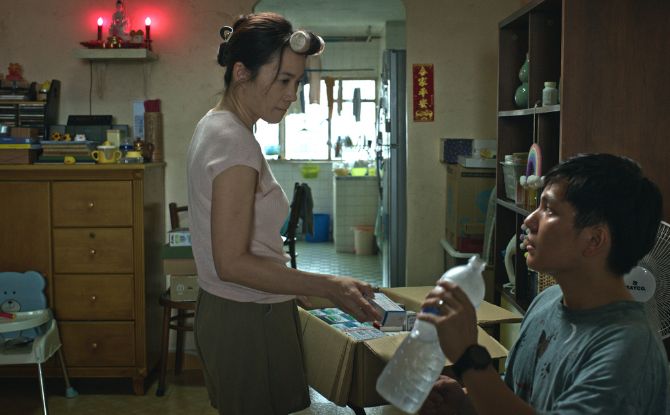
The cast portrayed their roles wonderfully. Yeo Yann Yann’s versatility as an actress is unmatched. From a fiesty beer lady to a caring grandmother, tender lover and an animated livestreamer, she carries her roles with ease and keeps audiences engaged throughout.
It was also a joy to watch Koh Jia Ler grow in his roles through the years and in this film – the transition from boy to man was a heart wrenching experience.
Catch We Are All Strangers in cinemas starting 20 August.
Media Invite