
Malay Heritage Centre, located at the Kampong Gelam area of Singapore, explores how Malay communities in Singapore have evolved over time. Inside its six permanent galleries and 279 artefacts, you can go on a journey from 19th-century Singapore to the possibilities that lie in store in the future.
Malay Heritage Centre: Exploring the Past and Future
After undergoing a revamp, the Malay Heritage Centre reopens on 25 April 2026.
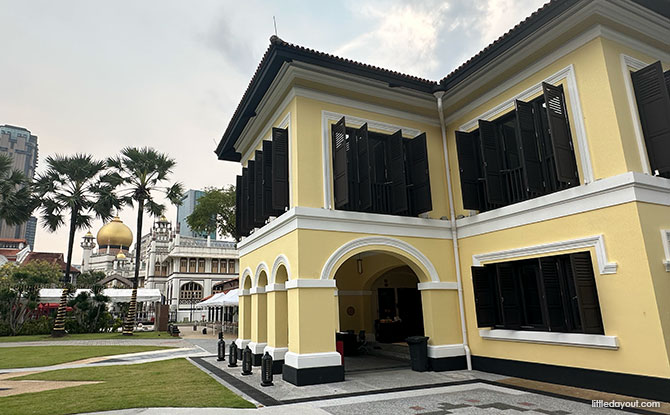
The museum is housed within Istana Kampong Gelam, a building that was once a palace for Malay royalty. It was originally the residence of Sultan Hussein Shah and it now offers visitors a chance to learn about the Malay identity and contemplate on what it means to be Malay in Singapore, and how this identity continues to evolve with time.
The revamped Malay Heritage Centre also highlights the rich tapestry of Malay heritage and features broadened representation across Malay sub-ethnic groups through material culture, language and writing systems.



Amongst the diversity of Malay heritage showcased at the Malay Heritage Centre include the Javanese, Baweanese, Bugis, Banjar, Minangkabau, and Orang Pulau communities.
Preview Gallery
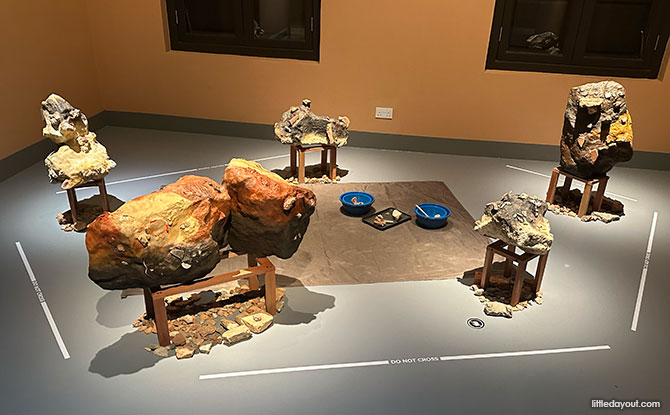
When you first step into the building, you will find yourself in the Preview Gallery.
At one end, a short film that traces the history of the Malay world while on the other side, there is a commissioned artwork Earthly Echoes by Fazleen Karlan (NEO_ARTEFACTS), which reimagines the layered histories of the site.
Gallery 1: “We are Playing Relatives!”
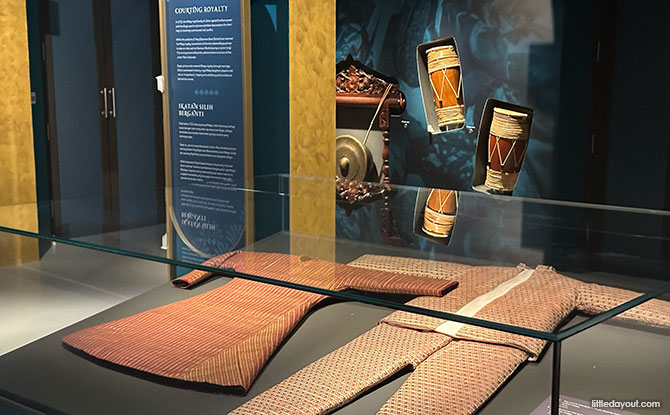
The first gallery of the Malay Heritage Centre explores the theme of kinship formation in Singapore and Riau-Lingga.
It illustrates how kinship was formed through marriage (“Marrying Kin”), common languages (“Speaking Kin”), and shared material culture and practices (“Dressing Kin”).
The gallery also highlights how British and Dutch colonialism began to disrupt the traditional power structures in the region.
Gallery 2: An Era of Changing Kings
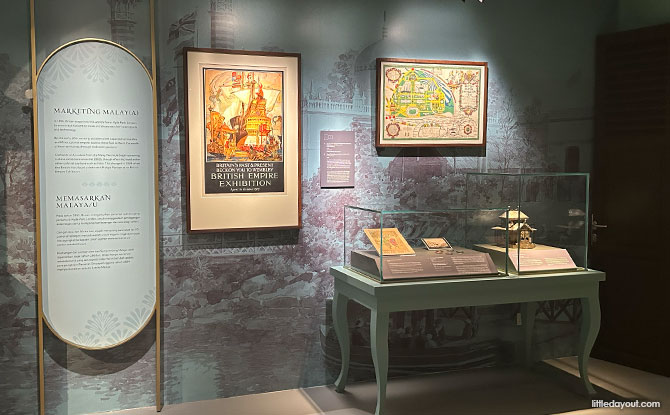
Next, Gallery 2 examines the complexities of the Malay peninsula and Singapore during the early 20th century. This was a period that was characterised by a tussle for power between the Malay royalty, the British colonial government, and a new Malay urban middle class.
The artefacts in this gallery emphasise the intersection of power, trade, and colonial influence.
Gallery 3: Journeying to Settling
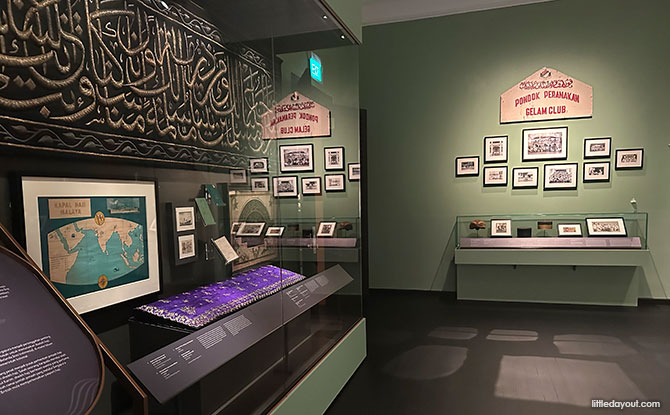
Learn about the cultural rite of passage of migration at Gallery 3 on the second floor of the Malay Heritage Centre.
Here, you can ponder how Singapore’s position as a cosmopolitan hub catalysed the movement of people, goods, and ideas across Southeast Asia.
Look out for artefacts such as the pilgrim pass belonging to Hajjah Maimunah, who was the first licensed female sheikh haji (pilgrim broker) in Singapore, and a Jawi typewriter belonging to Ustaz Syed Ahmad Semait, founder of Pustaka Nasional which furthered Islamic knowledge in the Malay language.
Gallery 4: City of Dreams: Making A Mark
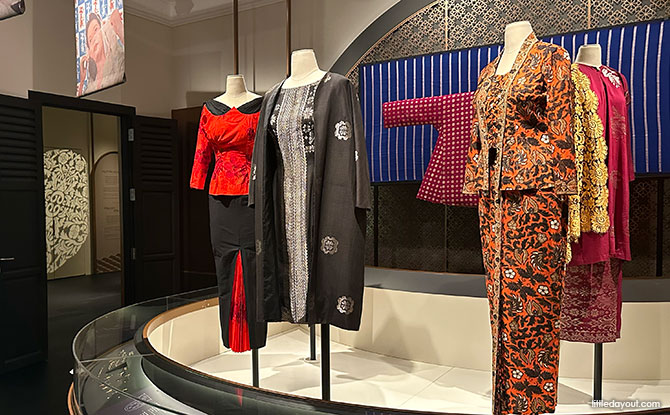
One of the shifts in focus at the Malay Heritage Centre is that onto the role of women in the community. Gallery 4 explores the changing visibility and roles of Malay women in the 1950s and 1960s.
Learn about their contributions to education, literature, and the arts, as well as the challenges they faced in forging their own paths.
Amongst the Malay women featured include the first known woman pilgrim broker Hajah Maimunah, the first Malay woman radio announcer Zahrah Za’ba, and cultural innovators like Nona Asiah and Siti Radhiah.
Gallery 5: Our Living Heritage
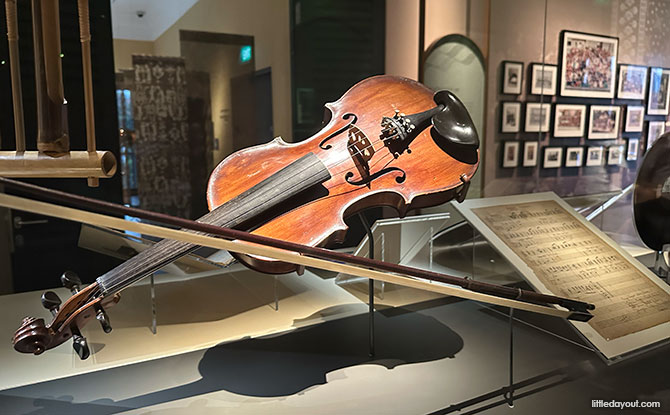
The Our Living Heritage gallery explores how Malay traditions, memories, and values are passed down, adapted, and sustained within families and in everyday life.
It focuses on intergenerational transmission through life cycle events, showcasing how the purpose of traditions is preserved even when their material expression changes.
Gallery 6: We+ Heritage
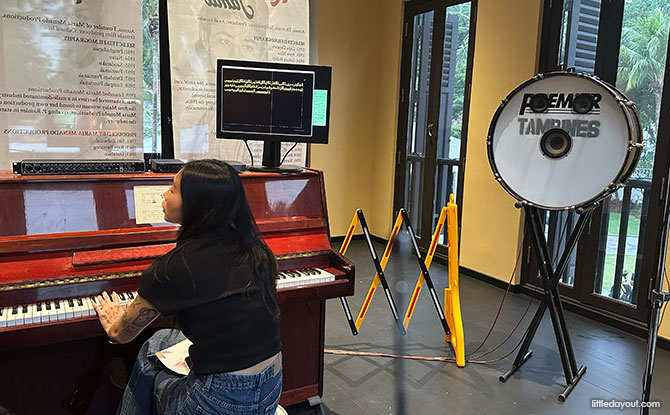
This last permanent gallery of the Malay Heritage Centre encourages visitors to consider the future of the Malay identity in Singapore.
This space presents three collaborative elements.
The first is a collaboration with the National Library Board: The gallery features 20 personalities, young and old, some of whose profiles can be found in NLB’s Prominent Malays of Singapore (PMoS) portal—an online database showcasing remarkable individuals who have shaped Singapore over the past 60 years.
Second is a curated reading corner featuring works by Singapore Malay creatives.
Third is participatory art installations, including Sistem penyulitan masyarakat lusa (sipemalu) (encryption system for society of the future / the shy one) by Bani Haykal is an interactive sound installation exploring alternative tools for cultural preservation in the future.
Corridors of Cultural Memories
In between the galleries are the Corridors of Cultural Memories. These provide vignettes into the Malay community’s everyday life, traditions, and shared histories.
On the Corridor on the first floor, you can learn about the physical history of Istana Kampong Gelam, from its origins as Sultan Hussein Shah’s 1819 residence to its establishment as the Malay Heritage Centre in 2005.
Another section of the first floor Corridor explores the linguistic diversity of the Malay world with themes that centre on the preservation and evolution of language and script.
There is also a small room on the first floor that showcases wayang kulit puppets.
On the second floor, the space focuses on Malay artisans who derived inspiration from the natural world, including flora, fauna, and mythical beings, to create carvings, tools, and textiles.
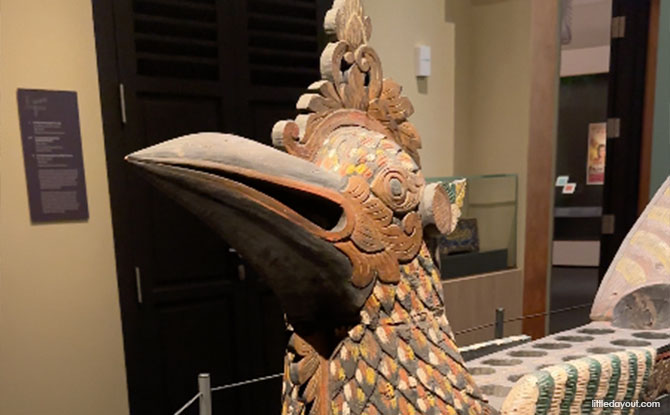
One highlight is a carved wooden congkak set that has been modelled after a mythical bird. It showcases how Malay artisans were influenced by Hindu-Buddhist and Muslim kingdoms from across the Siamese border.
You can also pause to admire the newly commissioned works by local Malay artists that have been incorporated into the spaces and stair wells.
Visiting the Malay Heritage Centre
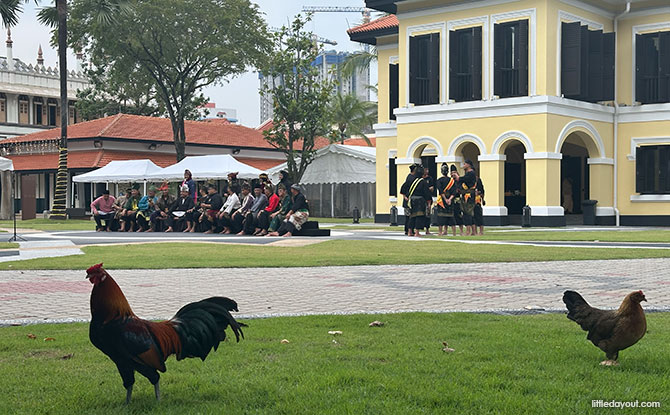
In conjunction with Malay Heritage Centre’s reopening, all visitors (including tourists) can enjoy free admission to the galleries from 25 April to 28 June 2026.
After this period, Singaporeans and Permanent Residents can continue to enjoy free admission to MHC’s galleries year-round.
The Malay Heritage Centre reopens on 25 April 2026 with a nine-day reopening festival Pesta Pecah Panggung from 25 April to 3 May 2025.
Malay Heritage Centre
Where: 85 Sultan Gate, Singapore 198501
Permanent Galleries Opening Hours:
Tuesdays to Sundays, 10am to 6pm (Last admission at 5.30pm)
Closed on Mondays
Compound Opening Hours:
Tuesdays to Sundays, 8am to 9pm
Closed on Mondays
Website: Malay Heritage Centre