
Few might know of archaeologists in Singapore. In fact, is there even anything to dig? Everything in Singapore seems pretty … well excavated. So, we spoke to an archaeologist and his team of diggers to uncover some truth about what the life of an archaeologist in Singapore is like.
An archaeologist is a person that studies human history through research and excavation of sites, analysis of artefacts and other physical remains. The most recent digs were at Fort Canning Park, where Mr Michael Ng, Research Officer of ISEAS has been attempting to find 14th century remains.
Archaeologists don’t just Dig or Explore Cursed Temples
Contrary to assumptions you have on Indiana Jones’ type of adventuring, archaeologists usually spend most of their time doing research, ascertaining research questions to ensure a sound purpose of excavating a particular site, then processing the finds and further study.
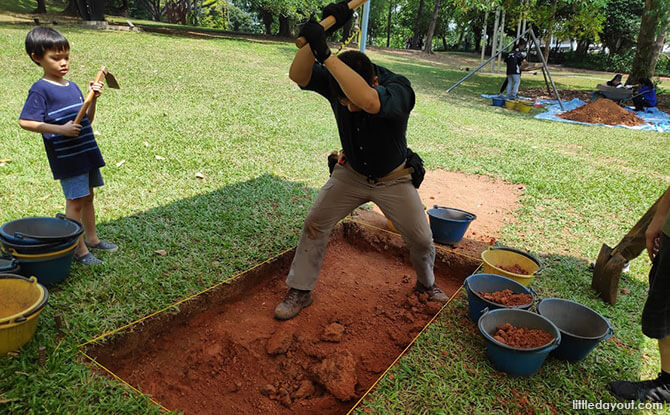 Mr Ng shared that the digging we see usually takes up just 20% of archaeologists’ work-life. Nonetheless, archaeology is probably the only social science that requires much elbow grease. Just like the nature of the digging, many more stories come from what lies beneath and what we can see from the artefacts, if any.
DISNEY ADVENTURE CRUISE: Guide and Tips to Disney's Latest Ship
MARCH HOLIDAY FUN: 20+ Things to with Kids in Singapore



The Significance of Fort Canning Park
Fort Canning Park, as we know, is one of the high points in the city area. Temasek, or early Singapore, was possibly part of the Majapahit Empire and the Ayutthaya Empire – prime area for trading activity.
The evidence points to the presence of craftsmen and trading activity in the 14thcentury. In addition, Fort Canning is significant as a site for early royalty, the official residence of Sir Stamford Raffles and our first botanic gardens.
The Fort Canning dig sites that we visited on two occasions were attempts to uncover both remains from the Colonial period and 14thCentury.
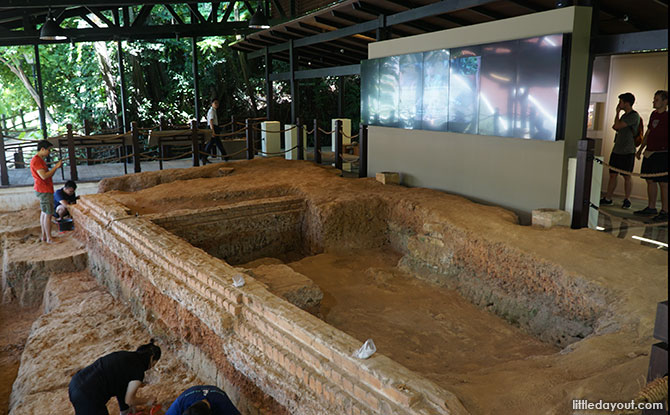 Artisans’ Garden – an excavated site that the public can visit, uncovered what was once the location of craftsmen workshops. Hence, it is believed that over 600 years ago, there were highly skilled craftsmen making precious objects such as glass and ceramics for the natives or even tradesmen passing the area.
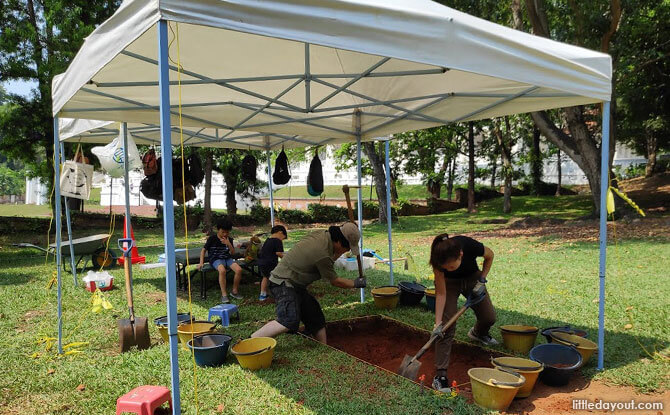 Interestingly, the sites that were dug were of a native latrine.
Archaeologists dig in layers. This allows them to examine the different strata of the soil to piece together a map of the site over site. This is also called Stratigraphy. It explains which layers of soil were associated with human occupation and can also illustrate events such as natural disasters.
Stratigraphy can also show archaeologists which layers are not associated with human occupation. Hence, the soil layers reflect various time periods of how sites were used, abandoned or reused.
Artefacts are the Evidence from which Archaeologists Learn about Stories of our Past
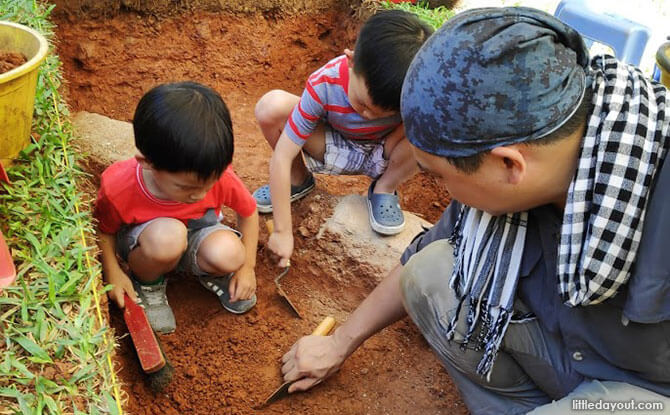
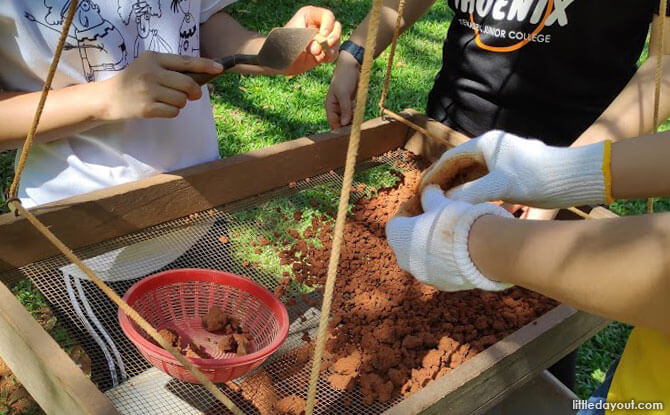 After digging, the team will sift through the soil using a screen to ensure no artefacts remain. If artefacts are found, they are placed in separate labelling bags and sent for processing.
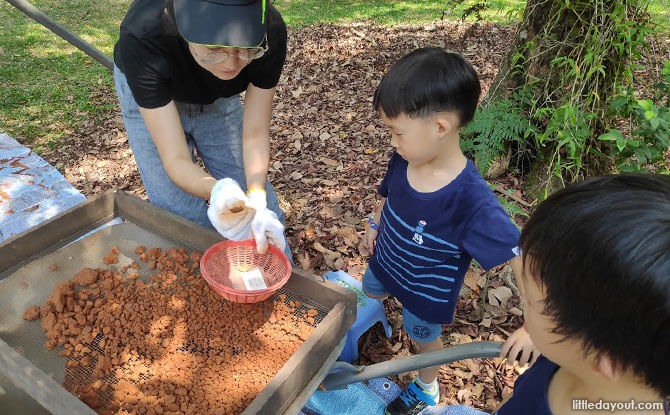 We had the honour of trying to sift out pieces that were worth keeping, and it takes a really experienced eye to suss out the difference of a rock, metal, building material or ceramic. One tip we got was to feel the texture and see the colours. If it is of a uniform colour, it could be something worth processing!
During the processing, the team will need to clean, analyse and interpret the findings. It is estimated that in archaeology, for every hour of digging, it takes at least 20 hours of laboratory and other work to complete a study.
That’s many years of research and laboratory work!
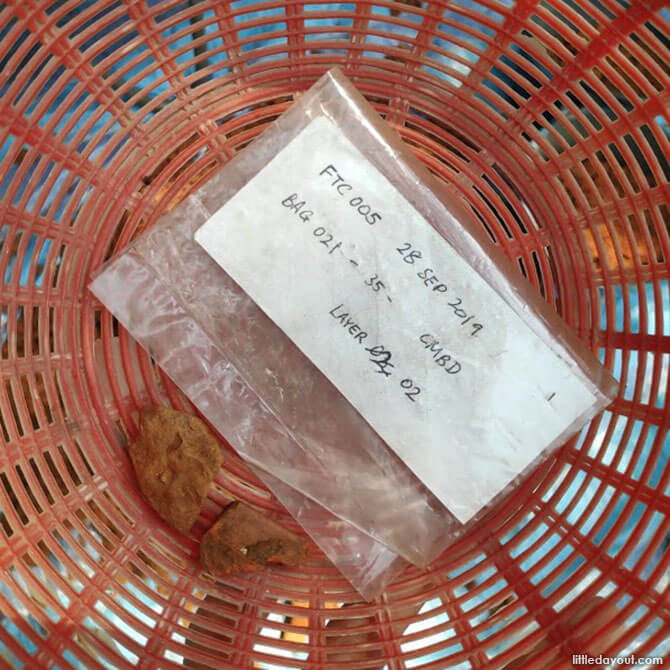 Some of the finds from previous sites are currently on display at the Asian Civilisations Museum as well as permanent galleries at National Museum of Singapore. There are also some artefacts such as pottery, jewellery and coins on display at Artisans’ Garden.
A Rare Find – Archaeologists in Singapore
We certainly had a field day learning more about the archaeologists’ work and had the chance to experience some digging. Not only does the work provide a good workout, it is rather mentally stimulating as well attempting to piece together pieces of the past.
For more information on ISEAS projects and community collaborations, visit https://www.iseas.edu.sg.