
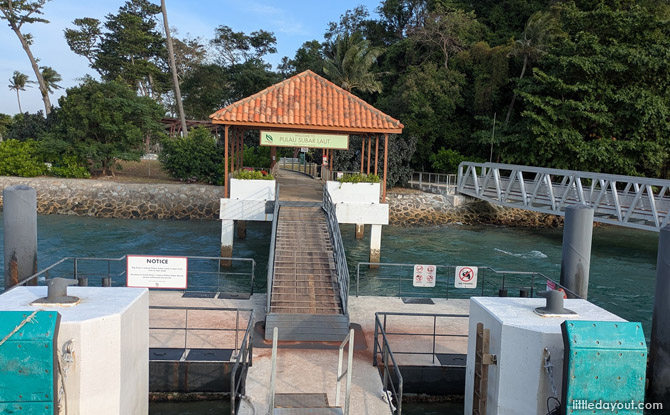
The annual Battle For Singapore initiative is back and this year its flagship event is Passages at Last Light: Singapore’s WWII Maritime Evacuation Routes. What was it like fleeing Singapore as it faced invasion? Did the evacuees survive? What are some of the stories shared?
Passages at Last Light sheds light on the lesser known perspective on WWII in Singapore – the evacuation routes. Many would have escaped by foot, bus and boat. Out of 5,000 that escaped via the maritime route, few lived to tell the tale.
National Heritage Board’s Battle for Singapore – A Journey via Boat
We have always heard about the war in Singapore in various forms: the surrender of the Allied forces, the Japanese Occupation, the war heroes, the atomic bombs then the surrender of the Japanese. One aspect which we have not often heard is the tale of those who attempted to evacuate when the Japanese descended onto our shores.
Participants to Passages at Last Light: Singapore’s WWII Maritime Evacuation Routes tour will first learn about Singapore’s maritime history, then onwards to Sisters Island taking a route that is similar to that of evacuees in February 1942.
DISNEY ADVENTURE CRUISE: Guide and Tips to Disney's Latest Ship
MARCH HOLIDAY FUN: 20+ Things to with Kids in Singapore


Dr John Kwok a historian and seasoned guide at Battle for Singapore programmes will be leading the tour on 21 February, 22 February, 28 February, 1 March, 7 March & 8 March 2026 from 5 pm to 7.30 pm.
Our Experience at Passages at Last Light
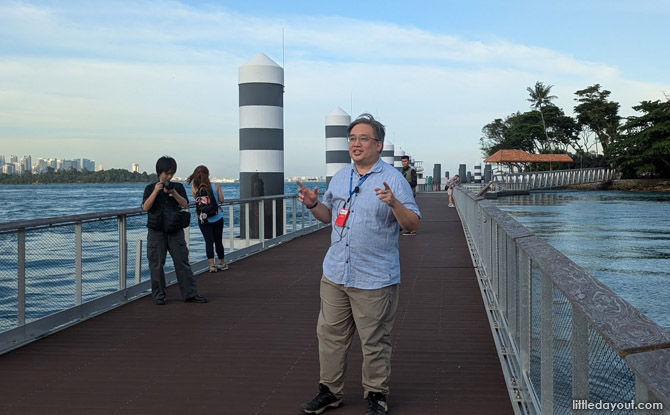
It was poignant to step into the shoes of the evacuees some eight decades ago, fleeing the war that was possibly shocking and hard to swallow. Having visited the Southern islands several times, it never occurred to me the routes were the very same ones that were taken. Many perished when the ships were bombed and sunk, others died in captivity or from disease. Out of 5,000, fewer than a thousand lived.
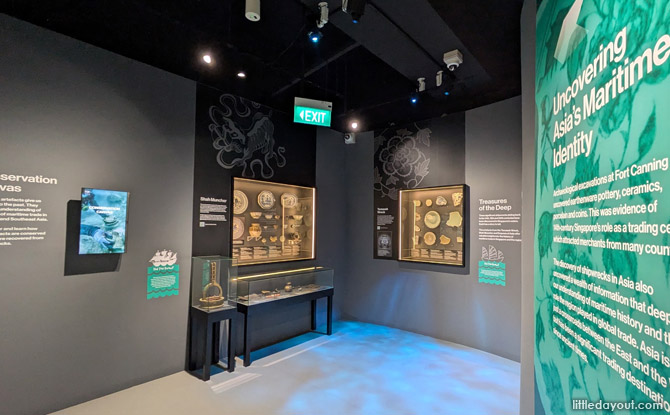
We started our tour at Singapore Maritime Gallery which had a recent refresh. Visitors can now see some artefacts recovered from shipwrecks found along the shipping lanes and learn about the history of maritime trade since the 14th century.
With the prominence of trade, Singapore was fortified to strengthen the defences of the busy channels. As tour participants would see later, the maritime routes were well protected by forts in the Southern part of Singapore. This was also pertinent to Japan’s strategy of attacking from the North hence taking the Allied forces largely by surprise.
We then embarked on a slow cruise towards Sisters Island passing Sentosa, St John’s Island and Kusu Island.
Looking at the horizon ahead dotted with island and sailing away from mainland Singapore, it must have felt tremendously difficult with the unknown both ahead and behind for evacuees leaving Singapore.
Dr John Kwok pointed out the bearings of Fort Serapong where guns would have been pointing northwards. Just next it was a beach where many were brutally massacred by the Japanese, whose corpses washed up ashore to the shock of the fishermen who found them.
St John’s Island was where German prisoners were held along with other POWs. This was also where rumour has it that the Japanese used the POWs as chess pieces on a larger-than-life chess board. The pieces that were defeated were apparently shot.
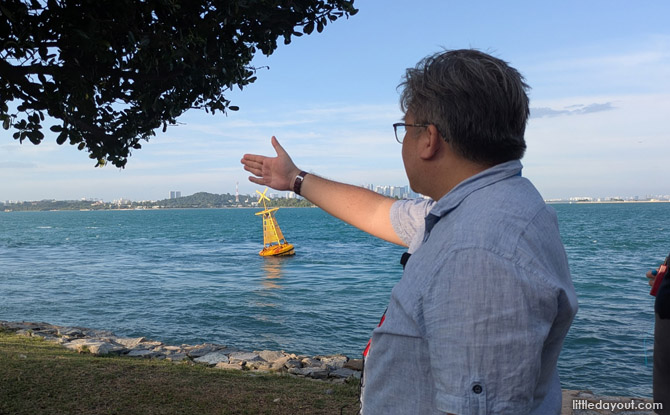
As we reached Sisters Island, Dr John Kwok shared more about the history of the islands and more on the evacuees who made it out to islands in Indonesia. Most were sailing towards Palembang, many ended up in Banka and Padang.
One famous evacuee who made it out via boat was Lim Boh Seng, whom we know as a war hero who started Force 136. We were also told of nurses who attempted to escape yet later massacred when their vessel was sunk.
Another example was General Gordon Bennett who famously stole a boat and successfully made his way back to Australia.
Learning about such stories gave us varied perspectives of those fleeing – some chose to flee to fight fiercely for their country, others abandoned their posts seemingly lacking courage. In the face of war, humans were indeed challenged to their limits and made hard choices.
Perhaps we would never be in the same position to make similar decisions. Passages at Last Light did lend us some space to ponder during golden hour.
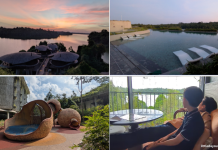
We made our way back home with the backdrop of a glorious sunset, not fleeing out of desperation but glad to be returning to a safe haven where peace reigns.
Passages at Last Light: Singapore’s WWII Maritime Evacuation Routes
To sign up for the tour, visit Battle for Singapore 2026’s site. Registrations open 12 February Thursday 12 pm. SG Culture Pass can be used for tickets.
When: : 21 February, 22 February, 28 February, 1 March, 7 March & 8 March 2026
Time: 5pm – 7.30pm
Price: $55 ($50 early bird from 12-20 Feb)
Location: Singapore Maritime Gallery
Meeting Point: Singapore Maritime Gallery