
We know the importance of our children learning science – it teaches them about the world and about themselves, and the endless possibilities it holds brings wonder into their lives.
Yet, many students struggle with science in primary school, causing their initial fascination to deteriorate into dislike and fear. More often than not, it is because they are not first taught to love the subject.
Nurture the Love of Learning with The Music Scientist
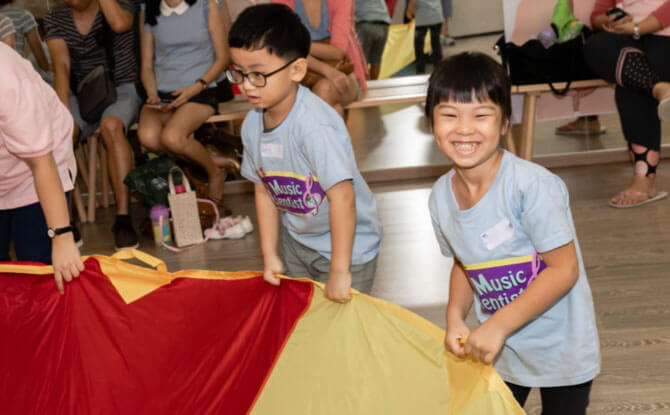
At The Music Scientist, we use music to enhance young children’s learning of science and cultivate their love for it. We believe that learning must begin early – when a child’s development is at its most fertile stage. By integrating music, movement and science together, we stimulate both the right and left brains, thus developing their minds holistically.
We also effectively nurture their love for learning through fun and play; giving them a head start for the rigorous science education that lies ahead of them.
GIVEAWAY: Win a Pair of Tickets to Family-friendly Show "A Little Goes A Long Way"
Huayi – Chinese Festival of Arts 2026: Family Fun at the Esplanade till 8 March
The Multiple Intelligences Approach
Our curriculum is designed based on early childhood pedagogies and music education principles. We also believe in the Multiple Intelligences pedagogical approach.
In 1983, Dr Howard Gardner asserted that human intelligence can be divided into eight forms. Hence it is important to help children find their strengths and develop them to their fullest potential. Learning science through music is a way to invoke children’s abilities and nurture them holistically:
- Bodily-kinaesthetic: A strong sense of body awareness through body movement is developed, and children learn to express themselves freely
- Musical-rhythmic: Children’s love for music and their musicianship skills are cultivated
- Visual-spatial: Spatial judgement and visualisation abilities are strengthened
- Interpersonal: Emotional intelligence is boosted, so children learn to socialise and work with others
- Intrapersonal: Self-confidence and awareness are built
- Verbal: Auditory skills improve, children use words effectively and develop the ability to comprehend and express ideas
- Naturalistic: A better understanding of the world and passion for nature is nurtured
- Logical: Good reasoning and critical thinking skills are developed

 Bringing Science to Life
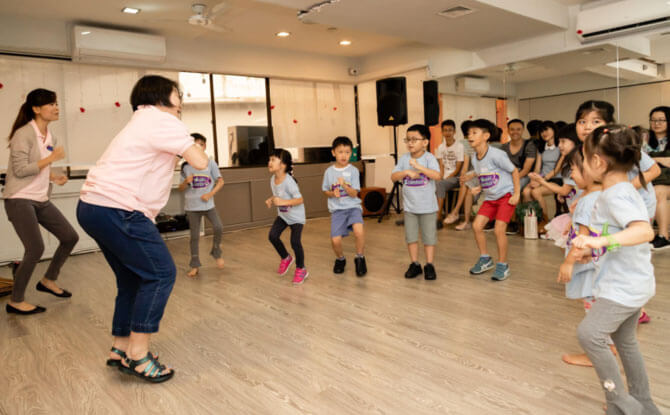
As numerous studies have shown, music can help children develop emotional connections to facts and information. When little ones listen to a familiar and catchy melody, they can recall the words in the song more easily. Music is also a great teaching tool to help children focus their attention and improve their concentration, especially when it comes to learning dry facts. Hence The Music Scientist programmes feature original compositions that are designed to engage and excite young children.
Likewise, dramatic play and movement inspires and increases their joy of learning. Through our activities, children get to immerse themselves in role-playing and acting out familiar and imaginary experiences. They are given opportunities to explore their body movements, interact with each other and communicate effectively.
Learning Through Tangible and Easy-to-understand Means
Often, science activity guides for young children contain scattered collection of science concepts that the children have difficulty understanding. At The Music Scientist, abstract concepts are presented in tangible and easy-to-understand format through thoughtful and fun-play activities, experiments and crafts. Our objective is to help your child connect, explore, discover solutions and start developing a lifelong interest in science.
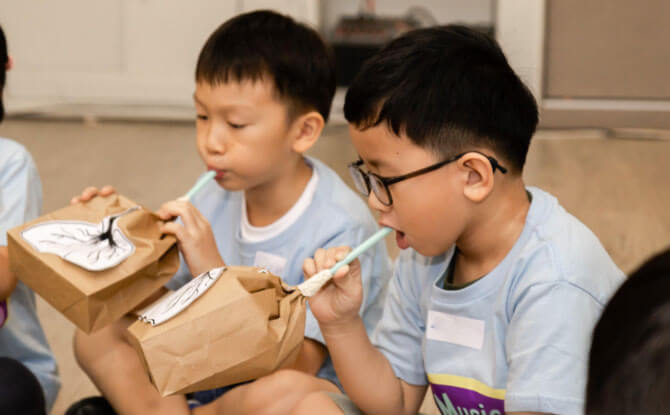 Science can be found in everything, and children are inherently curious – so we grab every opportunity to show your child that science is part of our daily lives. Our programmes cover topics from physics to human biology; children will use their senses to observe, explore, organise, and classify information. We seek to nurture their sense of curiosity, and guide them to discover the answers to their questions at their own pace.
MOVE IT, LOVE IT, LEARN IT THIS JUNE
This June holiday, The Music Scientist is holding a series of workshops to ignite your child’s curiosity about the human body. Sign up now to experience how science can be made more interactive and unforgettable through music!
This feature is brought to you by The Music Scientist.
Find out more about The Music Scientist’s programmes, workshops and events here or call 6909 6350.





![79 Best Free Outdoor Playgrounds In Singapore For Kids [Updated 2026]](https://www.littledayout.com/wp-content/uploads/outdoor-playgrounds-01-218x150.jpg "79 Best Free Outdoor Playgrounds In Singapore For Kids [Updated 2026]")