


Have you wondered about your mental health or your kids’ mental wellbeing?
How do you tell when your child or student or a family member is in distress that warrants help? Do you know where to look for help?
Getting mental health support from the public healthcare system takes a while. For subsidised appointments, the median waiting time to see a psychiatrist or psychologist is between 42 to 45 days.
In the waiting space, people in distress often reach out to those around them. The truth is, most of us don’t know how to respond. We mean well, but without the right tools or training, our support may not be enough.
DISNEY ADVENTURE CRUISE: Guide and Tips to Disney's Latest Ship
MARCH HOLIDAY FUN: 20+ Things to with Kids in Singapore



OTR Academy: Empowering All to be Mental Wellbeing Champions
The Over The Rainbow Academy (OTR Academy) community-powered model bridges the gap between professional mental health services and everyday support. It trains everyday people to become mental wellbeing champions.
Through practical, science-based courses, participants learn how to recognise early signs of mental distress and provide empathetic, informed support before problems escalate. The goal is to build a culture of care where someone doesn’t have to be in crisis before they’re seen, heard, and supported.
We speak to Yen-Lu Chow, founder of OTR Academy to tell us more about his mission. He also shares tips on various seasons of parenting.
Speaking to Yen-Lu Chow, Founder of OTR Academy
Tell us more about yourself, your story and why you started OTR Academy.

We started The OTR Academy because we saw a gap; one that no single institution, school, or practitioner could fill alone. Our experience at Over-The-Rainbow (OTR) for the past 13 years, with youths, parents, and communities has shown us a simple truth: mental health isn’t the job of a select few. It’s everyone’s responsibility.
But most people don’t feel equipped. They want to help, but they’re unsure how to begin, what to say, or how to identify when someone is struggling beneath the surface.
The OTR Academy was born from that experience.
Our goal is simple but urgent: to empower everyday individuals—parents, educators, employers, co-workers, friends—to become frontline mental health champions in their own circles. We do this by giving them the knowledge, tools, and real-life practice to notice early signs of distress, listen without judgment, and respond with empathy and care.
Our mission is ambitious: to train 10,000 wellbeing practitioners in the next 10 years. But it’s grounded in lived experience and over a decade of hands-on community work that has shown us how transformative it is when one person learns to hold space for another.
Because when more of us know how to care, listen, and respond with empathy that comes from the heart, we create safer homes, schools, workplaces, and ultimately, a kinder world for our youth.
What are the key issues parents and teachers should be aware of in their children and students?

Parents and teachers today need to recognize that mental health challenges among young people are not isolated incidents—they’re part of a growing and deeply complex crisis. In Singapore, mental disorders are now one of the leading causes of disability and even death among 10 to 14-year-olds, underscoring the urgency for adults to stay informed and attentive.
Several key stressors commonly drive emotional distress in children and adolescents:
Academic pressure and fear of disappointing adults
Children often internalize high expectations, leading to chronic stress, anxiety, or feelings of inadequacy.
Bullying, social exclusion, or online harassment
These experiences can profoundly impact self-esteem and may go unnoticed if young people feel ashamed or afraid to speak up.
Family conflict or tension at home
Even subtle changes in the home environment can heighten a child’s emotional vulnerability.
These pressures frequently show up not through words, but through behavioural or physical changes, such as:
Suddenly withdrawing from friends or activities they once enjoyed
Heightened irritability, emotional outbursts, or sudden mood swings
Frequent headaches, stomachaches, or fatigue without a clear medical explanation
Declining motivation, concentration, or school performance
A sensitive caregiver pays attention to a child’s baseline which includes their typical behaviour, mood, and rhythms. When something shifts noticeably from that normal behavioral pattern, it’s often an early indicator that the child may be struggling beneath the surface.
By staying observant, responsive, and compassionate, parents and teachers can intervene earlier and create safe spaces where young people feel seen, heard, and supported.
Since bullying has been in the limelight of late, how can we as a community prevent bullying and emotional distress in children?

Preventing bullying and emotional distress begins long before a child steps into a classroom and has its roots at home. Parents set the foundation by teaching empathy, modeling respectful behaviour, and helping children understand the impact of their actions on others.
When children grow up in environments where emotions are acknowledged and managed constructively, they are far less likely to engage in bullying or remain silent when they witness it.
As a community, we must intentionally build a culture of empathy and emotional literacy. This means normalising conversations about feelings, helping children identify and regulate their emotions, and encouraging kindness as a shared value rather than a personal trait.
Schools play a critical role by implementing social-emotional learning programmes that teach students how to understand emotions, resolve conflicts, and build healthy relationships. Equally important are strong school-home partnerships, where parents and teachers communicate openly—not just about grades, but about emotional wellbeing and behavioural patterns.
When parents, educators, and the wider community work together to form an interconnected web of support, we collectively send a powerful message to every child: You are not alone. Your feelings matter. And there are caring adults ready to help.
This shared responsibility is what ultimately prevents bullying and creates emotionally safe spaces where young people can thrive.
As children grow older to become youths, what kind of parenting strategies shift as with the growth of the children?
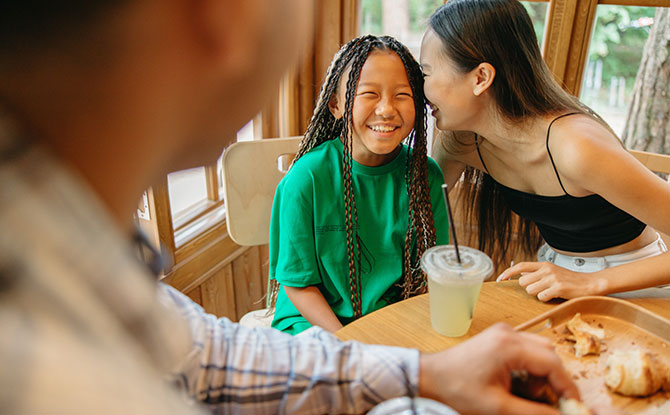
As children grow into teenagers, parenting strategies do evolve with the child’s developmental needs but the core principles remain the same: children of any age need to feel seen, heard, and safe.
For younger children, a strong, secure attachment to caregivers is the foundation of emotional wellbeing. They rely on consistent routines, physical closeness, and clear boundaries.
As children move into adolescence, their world expands. They face more complex social and emotional pressures, and resolution becomes less about managing behaviours and more about understanding underlying causes. This is where parenting must transition from directing to guiding.
The most important strategy at any age is maintaining open, non-judgmental communication. This means spending regular quality time together, creating space for honest conversations, and responding with curiosity rather than criticism—especially when topics feel uncomfortable.
When parents lead with empathy, show genuine interest, and stay connected even as their children push for independence, they send a powerful message: “I’m here. Nothing you do will make me love you less. No matter what happens, we can figure it out together.”
This sense of emotional safety is what supports young people as they navigate their challenges.
Let’s continue to look out for one another!
Thank you Yen-Lu, these are important reminders especially in the digital age where many things may not reflect reality.
Parents and teachers, look out for part 2 on how parents can better support their child’s mental wellbeing and what trauma-awaressness means.
Find out more about Over The Rainbow Academy here.